
Two Teeth, One Broken Assumption
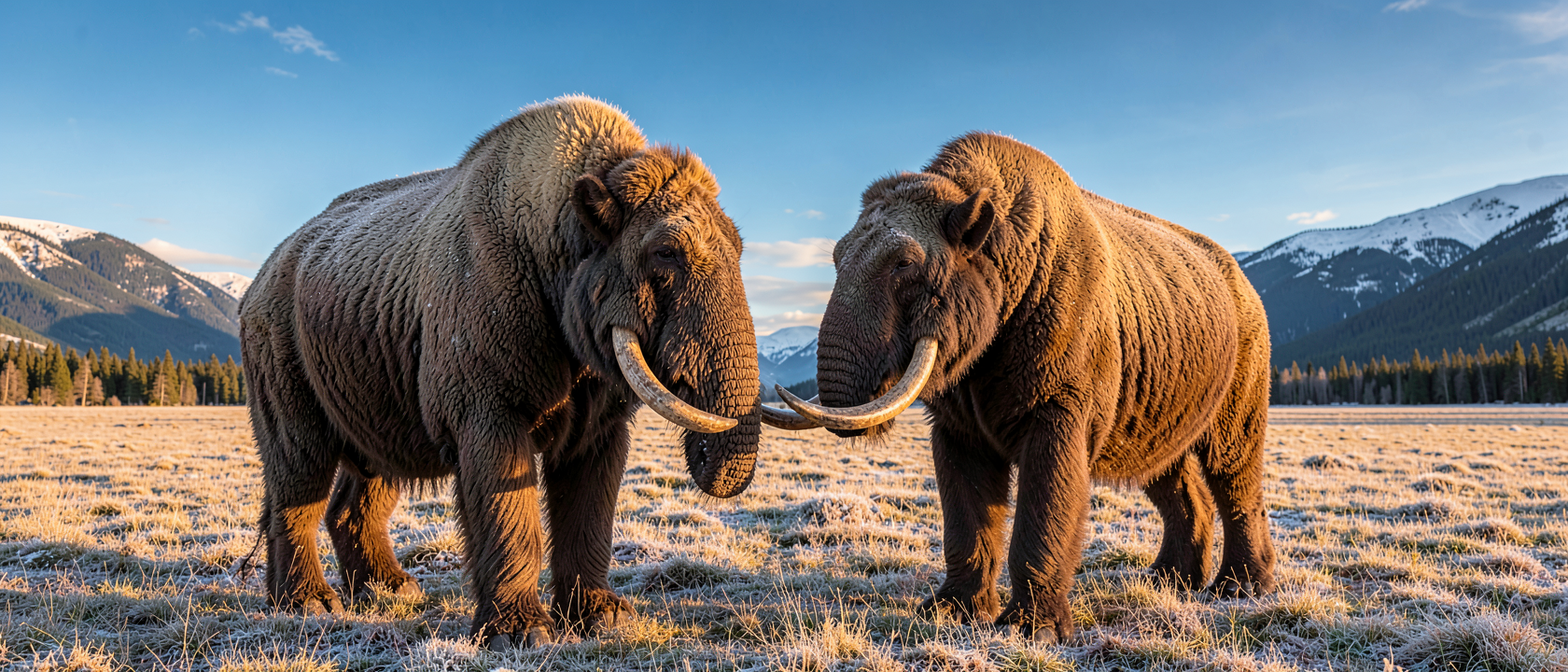
Pull a mammoth tooth from the ground in British Columbia, Canada, and you expect it to confirm what everyone already knows: that woolly mammoths and Columbian mammoths kept to themselves. Two teeth just did the opposite. A study published in the journal Biology Letters on September 24, 2025, led by Marianne Dehasque and including Prof. Adrian Lister of the Natural History Museum, London, and researchers from the Centre for Palaeogenetics in Sweden, sequenced DNA from two molars. Both animals carried genetic signatures from two species long treated as distinct: the woolly mammoth (Mammuthus primigenius) and the Columbian mammoth (Mammuthus columbi).
The older tooth, radiocarbon-dated to roughly 36,000 years ago, belonged to an animal with a little over 21 percent Columbian ancestry. The younger tooth, from about 25,000 years ago, came from an animal with just under 35 percent Columbian ancestry. That climb, generation after generation, only makes sense if the two lineages kept crossing back into each other for thousands of years, not once, but repeatedly.
How Two Ice Age Giants Kept Meeting
Woolly mammoths lived across what is now Canada and the northern United States, grazing on cold, open plains. Columbian mammoths, further south, lived in warmer country with a more varied diet. For a long time that division looked tidy: two species, two ranges, no overlap. Glacial periods didn’t respect that map. As ice sheets advanced, woolly mammoths pushed south into Columbian mammoth territory, and the two met at the shifting edge between cold steppe and temperate ground. Analysis of the sex chromosomes in the British Columbia teeth points to a pattern: mostly male Columbian mammoths breeding with female woolly mammoths.
This wasn’t the first time these lineages had crossed. A 2021 study led by Love Dalén and colleagues at the Centre for Palaeogenetics sequenced 1.2-million-year-old DNA from a steppe mammoth (Mammuthus trogontherii) tooth found at Krestovka, Siberia. It showed that steppe mammoths and woolly mammoths had already interbred once, likely after both crossed the now-submerged land bridge between Siberia and Alaska, producing the Columbian mammoth in the first place. Up to half of a Columbian mammoth’s DNA already traced back to woolly ancestors before the events recorded in the British Columbia teeth even began. The new study describes a second, much later round of the same arrangement, one that left the North American woolly mammoth population more genetically diverse than any other mammoth population known so far.
The Teeth That Didn’t Get the Memo
The team combined its genetic results with morphological data, meaning the physical shape of fossil teeth, drawn from a much wider set of specimens: genome-wide data from 16 mammoths, tooth measurements from 48, and mitochondrial DNA from 124 more. The mitochondrial DNA and the tooth shapes alone showed nothing unusual. Only the genome-wide analysis caught the hybridization, because the hybrids’ teeth simply refused to look mixed.
Hybrid mammoths further north kept the ridged, grass-grinding teeth typical of woolly mammoths, built for wearing down tough grass on open plains. Hybrid mammoths further south kept the flatter, more generalist teeth typical of Columbian mammoths, suited to a varied menu. Lister has argued that this cuts against a basic assumption about how hybrids are supposed to turn out: that traits simply average, so an animal bred from a long parent and a short one lands somewhere in the middle. These teeth averaged nothing. Whatever the genome said about ancestry, natural selection kept sorting for function, matching tooth shape to what the local landscape demanded long after the DNA itself had blurred.
Family Trees Aren’t Supposed to Grow Back Together
The textbook picture had woolly and Columbian mammoths as a clean split: two species, shaped by two climates, with separate diets and separate ranges. That picture is dead. The genetic record in the British Columbia teeth shows hybridization that was repeated and sustained over thousands of years, not a stray crossing that left no lasting trace.
Lister takes the argument further still. He points to this case as evidence against the standard branching-tree model of evolution, the assumption that lineages only ever split apart and never cross back. Here, two lineages didn’t just diverge and stay diverged. They kept crossing into each other, in both directions, helping build a new, more genetically diverse population in the process. A family tree that grows back into itself isn’t the oddity mammoths get flagged for. It may be closer to how evolution actually works, which says something about every tidy family tree you’ve ever taken at face value, mammoth or otherwise.
What the Teeth Don’t Say
Two teeth are not a population. The precise timing and number of individual hybridization events behind that climb from 21 percent to just under 35 percent Columbian ancestry are still under study. Most genome-wide work on mammoths so far has focused on Siberia, so how widespread this mixing was across the wider North American population, rather than a local pattern around British Columbia, remains unclear.
Underneath all of it sits the largest question this kind of research is chasing. If woolly and Columbian mammoths could interbreed, adapt, and keep re-meeting at their shared border for thousands of years, why didn’t that flexibility save them? Both species were gone by the end of the Ice Age. The teeth that recorded their long, complicated relationship don’t say why it ended.