
A Dog-Sized Dinosaur Just Rewrote the Dome’s Timeline
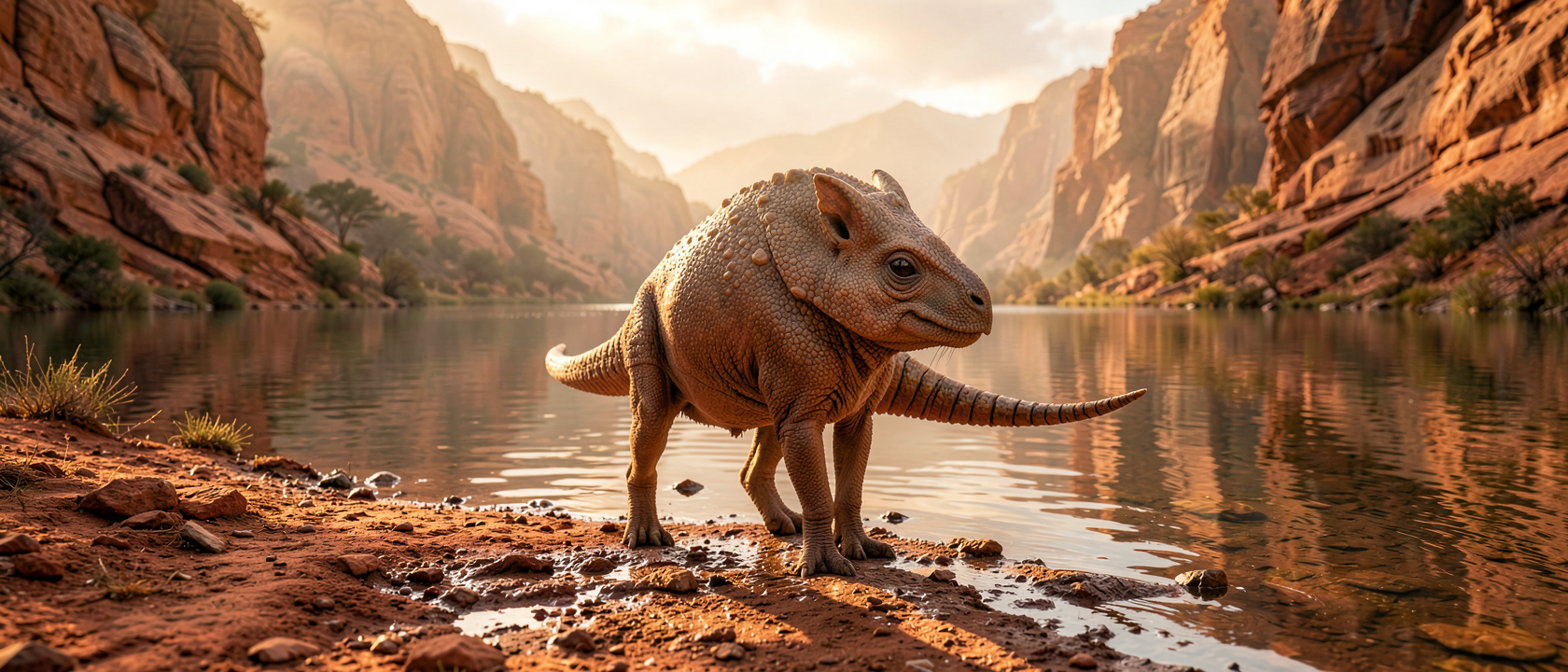
A dinosaur about the size of a German shepherd walked an Early Cretaceous lake shore in Mongolia 108 million years ago, already carrying a thick bony dome on top of its skull. It was not an adult. Paleontologist Tsogtbaatar Chinzorig led the team that described the new species, Zavacephale rinpoche, together with Lindsay Zanno of the North Carolina Museum of Natural Sciences, in the journal Nature. The animal measured about 3 feet (91 cm) long and weighed roughly 20 pounds (9 kg), tiny next to its much larger, later relative Pachycephalosaurus, which towered over it.
Two records come with it. Zavacephale is the oldest confirmed pachycephalosaur ever found, at least 14 million years older than the next-oldest known species, Sinocephale, from China. And its skeleton is the most complete this family has produced: limbs, shoulders, hips, a tail, plus two things never recovered from a pachycephalosaur before, finger bones and small stomach stones called gastroliths that helped grind up its food. For a group whose fossil record is mostly skull fragments, that completeness is the real headline.
The Skull Finished Growing Before the Dinosaur Did
The giveaway was in the limb bones, not the skull. Researchers sliced into the animal’s leg bones and examined them under a microscope, a technique called histology that reads growth rings and tissue structure much like a tree ring records a season. What it showed was an animal still under construction: bone tissue that had not finished laying down its adult structure, the signature of a juvenile short of full size.
The dome told a different story entirely. It was already thick, dense, and structurally complete, the kind of dome paleontologists had assumed belonged only to grown animals. Think of a teenager who hits the growth spurt that deepens the voice while the rest of the body still has years of growing left. In Zavacephale, the flashy, signature feature matured on its own schedule, finished well before the rest of the skeleton caught up to it.
A Dome You Don’t Have to Grow Up For
If the dome was done growing before the body was, the researchers argue, it probably was not a badge reserved for full adults. A finished display structure could already compete for mates or defend territory before an animal reached full size, which is exactly the kind of feature evolution tends to keep, because it pays off immediately instead of waiting for adulthood to matter. The dome looks less like proof of maturity and more like a tool a young, still-growing animal could already put to use.
The find also resets a different clock. Zavacephale’s age places the split between pachycephalosaurs and their horned relatives, the ceratopsians, at around 108 million years ago, and puts that split in Asia, with the family diversifying there before any of it reached North America. That is earlier than the fossil record had previously demonstrated, not because the split necessarily happened later than thought, but because nothing older had ever turned up to prove it.
The “Flat-Skulled Phase” That Never Existed
For years, the standard account held that the earliest pachycephalosaurs had only slightly thickened, nearly flat skull caps, an early stage before the lineage evolved its full dome. Wannanosaurus, a small species from China, was the textbook example of that primitive, flat-headed phase.
Zavacephale breaks that account. If a still-growing juvenile could already carry a complete, thick dome 108 million years ago, a flat skull cannot be evidence of an ancestral stage. The more consistent reading is that Wannanosaurus was never an early species stuck at a primitive point. It was a juvenile of an already domed lineage, caught at the same early stage of life that Zavacephale happened to preserve. The “proof” of a flat-skulled phase was never about the wrong anatomy. It was about the wrong age.
Most Pachycephalosaurs Are Just a Dome in a Drawer
Zavacephale is unusual precisely because it has a body attached to its skull. Most pachycephalosaur fossils are the opposite: a dome, alone, with nothing else to go with it. Without bones to run histology on, researchers often cannot say whether a given dome came from a juvenile, a subadult, or a full-grown animal, and sometimes cannot even confirm the species with confidence.
That gap feeds a live argument this discovery reopens rather than settles: whether Dracorex and Stygimoloch are genuinely their own species or simply younger growth stages of Pachycephalosaurus. Nobody is claiming Zavacephale answers that. What it does is sharpen the problem, since it shows how dramatically a dome can change across one individual’s own lifetime, which makes age even harder to rule out as the real explanation behind what looked like separate species.
Half a Bowling Ball on Toothpicks
Zanno has her own way of explaining why pachycephalosaur science spent decades holding little more than skulls. A pachycephalosaur’s head, in her image, is built like half a bowling ball balanced on toothpicks: a dense, heavy dome sitting on a comparatively fragile neck and body. Drop that combination into a river, which is roughly what happens to a dead animal over geological time, and the toothpicks do not survive the tumbling. The bowling ball does.
That is why so much of what paleontologists know about this family has come from isolated domes rather than full skeletons, and why Zavacephale’s body, complete enough to include a tail, hips, shoulders, and the family’s first known finger bones, is the rarer and more valuable find. The dome was never the mystery. Everything attached to it was.