Ninety-Six Percent
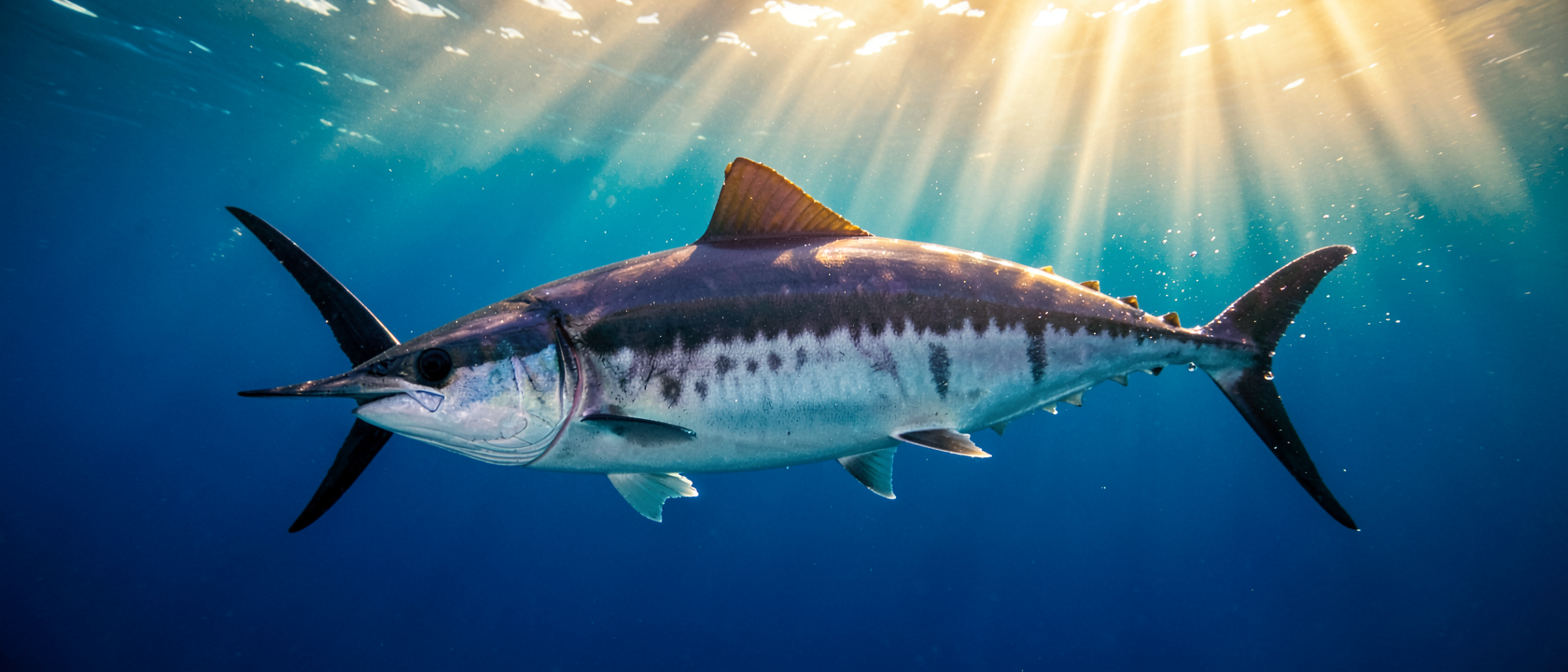
Scientists at the Federal University of Santa Catarina examined 53 skipjack tuna (Katsuwonus pelamis) caught off the coast of southern Brazil and found parasitic worms in 96% of them. The total count across the haul exceeded 1,600 individual worms. The infected tissues included the muscle: the flesh sold at fish counters, served in sushi restaurants, and eaten worldwide. Of every organ the researchers surveyed, only the kidney and the heart were completely worm-free in every single fish.
Published as a brief communication in Ocean and Coastal Research, the study used visual inspection alongside stereoscopic, optical, and scanning electron microscopy to examine each major tissue. Three parasite genera were identified: Anisakis (a roundworm, or nematode), Trypanorhyncha (a cestode, related to tapeworms), and Rhadinorhynchus. Anisakis is described in the parasitology literature as zoonotic, meaning it can infect humans under certain conditions. Accidental human infection with Trypanorhyncha larvae is rare; that genus causes more concern around consumer rejection than direct health risk.
Why the Worm Gets Into the Meat
The distribution of worms was not uniform. Intestines carried the heaviest load; muscle tissue ranked second; the stomach came third. The Federal University of Santa Catarina authors argue this pattern has a specific mechanical cause: after a skipjack dies, larvae migrate outward from gut organs into surrounding muscle. The interval between death and gutting determines how far they travel. The timing of a single handling step, not the water the fish came from, is the direct driver of how much worm ends up in edible flesh.
Anisakis larvae consumed in raw or undercooked fish can cause anisakiasis, with symptoms including abdominal pain, vomiting, and nausea. The parasite cannot reproduce in humans and typically dies within days. Worms killed during cooking or canning are, by current understanding, harmless.
This Is Not a Southern Brazil Problem
Skipjack is the most abundant tuna species in Brazilian waters and, in 2022, the third most-captured marine species globally, with approximately 3.1 million metric tons pulled from the ocean that year, according to figures cited in the Santa Catarina paper. A 2018 study in Parasitology Research examined 30 skipjack caught near Madeira Island in the eastern Atlantic and documented 24 distinct parasite taxa, including high prevalences of cestode larvae and Anisakis sp. larvae, confirming the species is heavily parasitized across its geographic range.
A 2020 University of Washington meta-analysis, published in Global Change Biology, tracked Anisakis abundance across decades of raw seafood data and found that prevalence increased 283-fold between 1978 and 2015: from fewer than one worm per 100 fish hosts on average to more than one worm per individual fish. The Santa Catarina result is not a regional anomaly; it is a local data point on a curve that has been climbing for four decades.
About That Canned Fish
Canning involves heat sufficient to kill larvae, and dead worms are harmless. The kill step exists and works. What also exists is active research aimed at the assumption that processing eliminates the problem entirely. Parasitologists in the United States are studying worms recovered from expired canned fish to track parasite loads across the processing chain over time. That work has not yet published conclusions, but its existence signals that the gap between “kills the worm” and “keeps the worm out entirely” is considered worth measuring.
The Worm Is a Good Sign
Chelsea Wood, a parasitologist at the University of Washington, holds that high parasite loads in wild fish signal ecological health, not damage. The Anisakis life cycle threads through multiple trophic levels: larvae pass through plankton and into fish and squid, then reach whales and dolphins, the definitive hosts where the adult worm reproduces. Wood’s proposed explanation for the 283-fold increase since the late 1970s is direct: the rise tracks the recovery of marine mammal populations following the U.S. Marine Mammal Protection Act, enacted in 1972, and the International Whaling Commission’s moratorium on commercial whaling, which took effect in the 1980s. More whales and dolphins meant more definitive hosts; more definitive hosts meant more Anisakis in the fish below them.
Wood stated in 2025 that the presence of anisakid worms in fish can signal that the fish came from a healthy ecosystem. The long-term consequences of the trend for both marine ecosystems and food systems remain unresolved.
“There Are Worms in Everything You Eat”
At a public talk at the Seattle Aquarium in 2020, Chelsea Wood told the audience exactly that, not as a warning, but to make the point that eating raw seafood is unwitting participation in the same biological chain that connects plankton to fish to whales. The consumer who eats a raw preparation is, in Wood’s framing, one more node in a food web that Anisakis has been navigating for millions of years. Whether the 96% prevalence found off southern Brazil holds across the full global range of a species accounting for 3.1 million metric tons of annual catch is precisely what the parasitology literature cannot yet answer. Systematic studies remain scarce relative to the species’ commercial importance.