
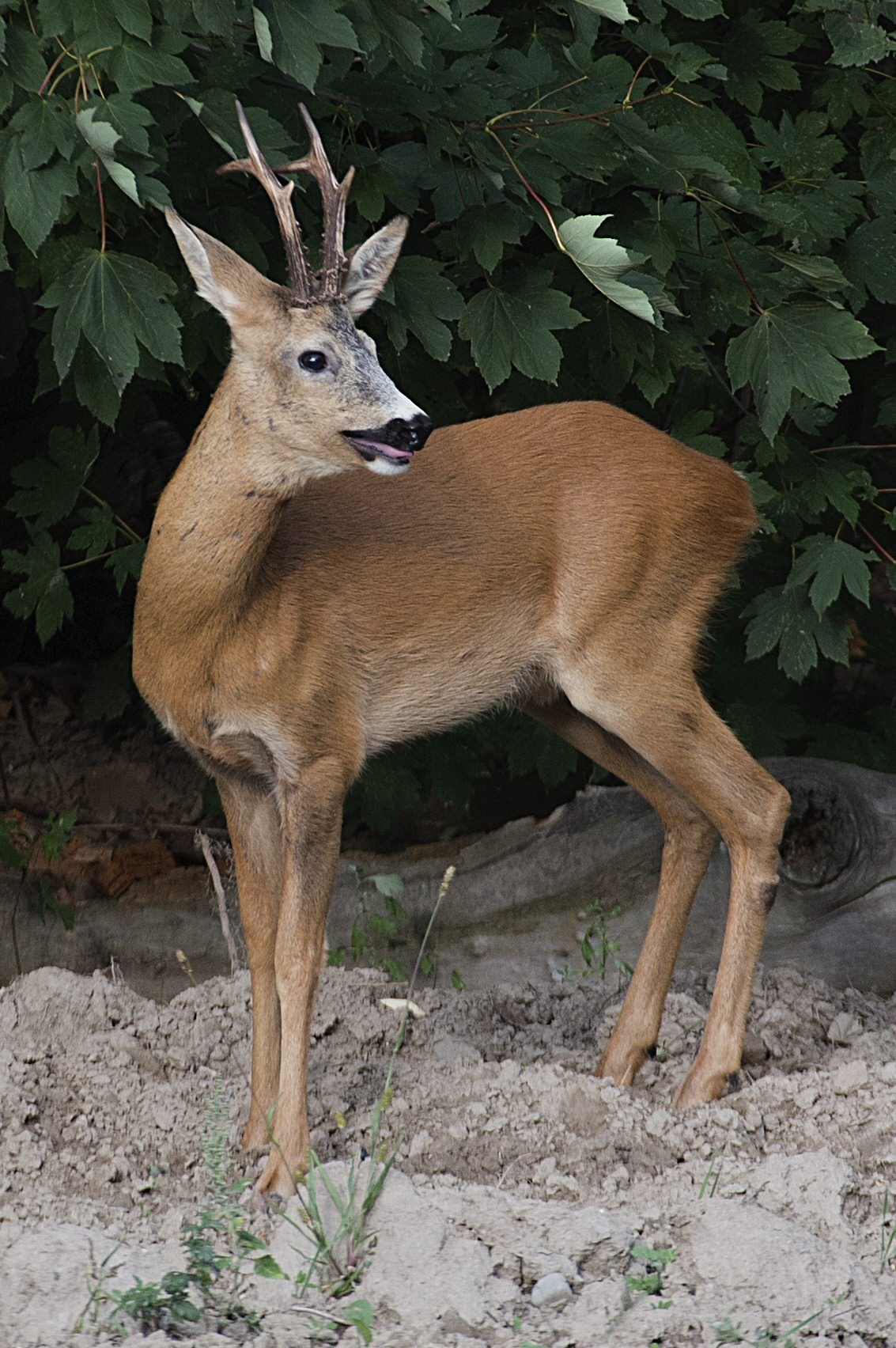
The roe deer (Capreolus capreolus) is the smallest and most widespread deer species in Europe, ranging from the Mediterranean and Scotland in the west to the Caucasus, northern Iran, and Iraq in the east, and from Scandinavia south to the Mediterranean coast. Despite its modest size, standing 65–85 cm at the shoulder, it is a physiologically unusual animal: it is the only ungulate in the United Kingdom in which delayed implantation occurs, meaning a fertilised egg does not begin to develop in the uterus until early January, months after mating. A 2024 paper in Communications Biology revised the understanding of that dormancy, finding the embryo does not fully arrest but continues slow developmental progression with measurable changes in epiblast morphology and gene expression, setting roe deer apart from most other diapausing mammals.
Key facts
- Scientific name: Capreolus capreolus
- Kingdom: Animalia
- Phylum: Chordata
- Class: Mammalia
- Order: Artiodactyla
- Family: Cervidae
- Genus: Capreolus
- Taxonomic rank: species
- Mass: 1.4 kg
- Gestation period: 283 days
Physical description
Roe deer stand 65–85 cm at the shoulder and measure 95–146 cm in head-to-body length. Adults weigh between 15 and 60 kg, with the heaviest individuals drawn from populations in the Ural region and northern Kazakhstan. Body weight follows a consistent geographic pattern: it increases from southwest to northeast, from lower to higher elevations, and from warmer to colder climates.
The coat is reddish-brown in summer and shifts to a thicker grey-brown in winter. A prominent white rump patch serves as an alarm signal, flashed when the animal is alarmed; the tail is virtually invisible. Bucks grow antlers up to 20–25 cm long, typically bearing two or three points and rarely four. Antlers are shed in autumn and regrown through winter, a schedule that sets roe deer apart from most other deer, which cycle their antlers through summer.
Roe deer are red-green colour-blind, but the eye is adapted for low-light conditions, giving superior night vision compared to humans. The sense of smell can detect predators at 300–400 metres when the wind is favourable, and hearing extends to frequencies roughly twice as high as the human range.
Range and habitat
The species range covers an arc from Scotland and the Mediterranean in the west to northern Iran and Iraq in the east, and from Scandinavia southward. Within that range, roe deer occupy a wide variety of environments: woodland edges and clearings, agricultural steppes, moorland, scrub, hedgerows, and, with increasing frequency, suburban parks and gardens.
Taxonomically, roe deer are more closely related to reindeer, moose, and the American white-tailed deer than to the red deer of Central Europe, a relationship that is not obvious from their appearance or size.
Diet and feeding behaviour
Roe deer are classified as concentrate selectors, or browsers, preferring high-quality, low-fibre plant material: forbs, young shoots, leaves, berries, fungi, and bark. Recent research has shown significant feeding flexibility across habitats, meaning the concentrate-selector label, while accurate as a baseline, understates how broadly the species can adapt its diet.
Activity patterns and behaviour
Roe deer are primarily crepuscular, most active at dawn and dusk. This pattern is partly a response to disturbance and heat rather than purely a fixed biological rhythm. When alarmed, a roe deer emits a bark closely resembling a dog’s and simultaneously flashes its white rump patch, a combined acoustic and visual signal.
Bucks are strongly territorial during spring and summer, holding territories that typically run from 5 to 20 hectares. Territory is marked through scent glands located on the forehead, legs, and hooves, supplemented by ground scraping and fraying vegetation with the antlers.
Reproduction and the rut
The rut runs from mid-July to the end of August. During this period bucks become aggressive and may fight by locking antlers, with serious injury or death occurring in some encounters. Fertilisation takes place during the summer rut, but because of delayed implantation the egg does not begin to develop in the uterus until early January.
The overall gestation period, including the dormant phase, spans 264–318 days. Females give birth between mid-May and mid-June, usually to twins, sometimes to a single kid, and occasionally to triplets. Kids carry dappled coats for the first six weeks, providing camouflage during the period when they spend most of their time lying concealed.
The winter antler-growth cycle is a direct consequence of the summer rut: because mating occurs in July and August rather than autumn, and because the gestation period is long, bucks grow and clean their antlers through winter rather than summer, the opposite of what is seen in most other deer species.
Lifespan and survival
Roe deer can live up to 16 years, but most individuals in wild populations survive only to about 7 years. The gap between maximum and typical lifespan reflects heavy predation and hunting pressure across much of the range.
Taxonomy and description history
Carl Linnaeus first placed the roe deer in the modern taxonomic system under the name Cervus capreolus in his 1758 work Systema Naturae, on page 68; the species was published on 31 December 1758. It sits within the family Cervidae, order Artiodactyla, class Mammalia, phylum Chordata, kingdom Animalia. The genus Capreolus is distinct from the larger Cervus genus to which Linnaeus originally assigned the species.
Relationship with people
Roe deer can cause significant damage to young woodlands and agricultural crops through browsing and fraying. At the same time, the species carries economic value through stalking and venison sales, a dual status that shapes deer management policy across much of Europe.
In the British Isles, the species has been present since at least the Mesolithic period, well before any managed introduction. That long residence, alongside the red deer, makes roe deer one of only two species that can be described as truly native British deer.
Current research
The most significant recent shift in understanding concerns embryonic diapause. The textbook account treated diapause in roe deer as a near-complete developmental arrest. The 2024 Communications Biology paper overturned that picture, demonstrating that the roe deer embryo continues slow but measurable progression through the dormant period, with detectable changes in epiblast morphology and gene expression. This places roe deer in a distinct category among diapausing mammals and raises questions about the cellular mechanisms that allow controlled, partial development in the absence of implantation.
Did you know
- Roe deer have been native to the British Isles since at least the Mesolithic period (roughly 6,000 to 10,000 years BC), making them one of only two truly native British deer alongside the red deer. (bds.org.uk)
- A hybrid between a Hog Deer (Axis porcinus) and a Western Roe Deer (Capreolus capreolus) was recorded at Dresden Zoo in 1862, but the offspring died at just 8 days old. (wilddeer.net.au)
- Roe deer are red-green colour-blind but have superior night vision compared to humans, a feature that serves them well as a crepuscular prey species. (animalfunfacts.net)
- The roe deer can run at speeds of up to 60 km/h (37 mph), making it one of the swiftest small deer in Europe. (animalfunfacts.net)
Data sources
- GBIF
- Wikidata
- bilderreich.de
- wildenatur.com
- wob.org.uk
- bds.org.uk
- pmc.ncbi.nlm.nih.gov
- animalkingdom.org
- mammal.org.uk
- animaldiversity.org
- animalfunfacts.net
- zenodo.org
- nature.com
Data updated: 2026-10-31