
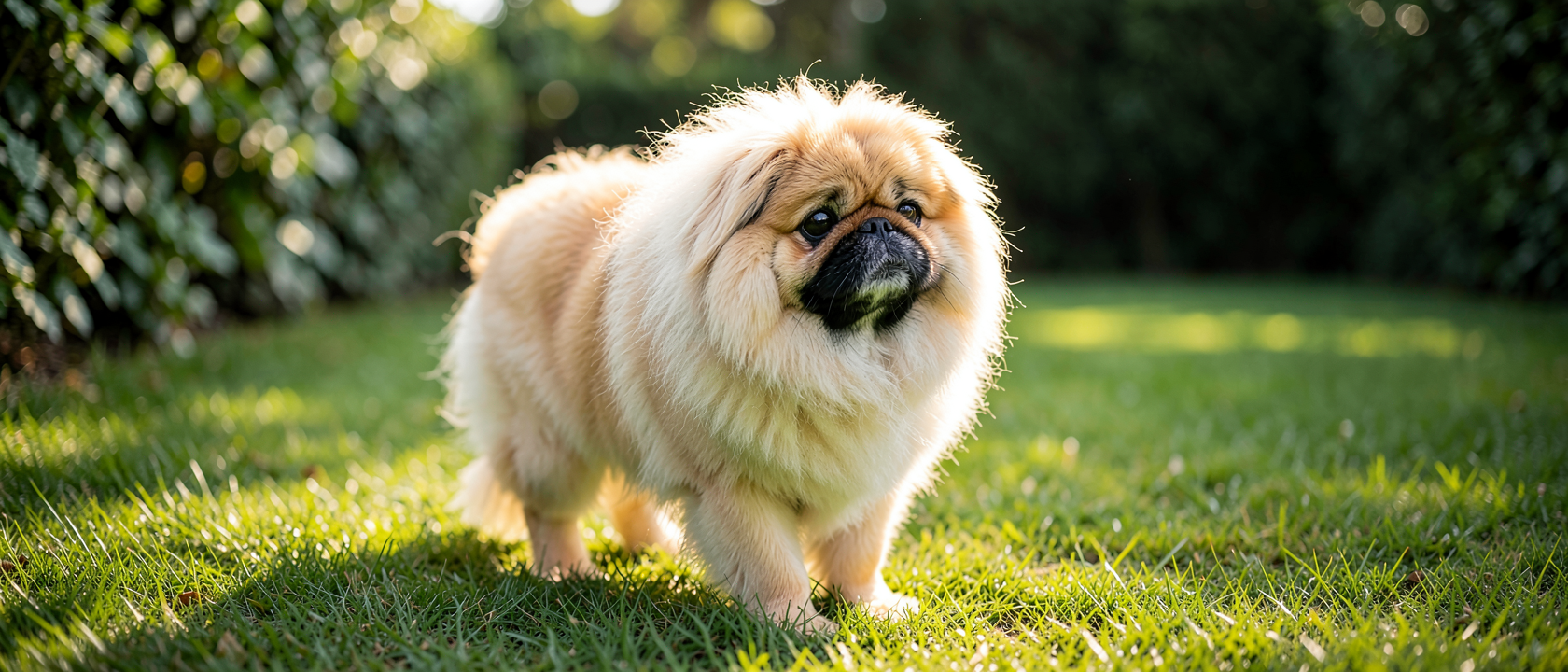
A Pekingese breathing hard at the dog park is treated as cute. A Bulldog breathing hard the same way is treated as a warning sign. A new study says that gap in how we read the two breeds makes no physical sense. In a Cambridge-led study of 898 dogs across 14 brachycephalic breeds, only 10.9% of Pekingese scored grade 0, symptom-free, on the standard 0-to-3 scale for brachycephalic obstructive airway syndrome (BOAS). That figure sits almost level with the 2016 reference data for Bulldogs, and it is worse than the rates posted by Pugs or French Bulldogs in that same comparison set. Francesca Tomlinson and colleagues at the University of Cambridge’s Department of Veterinary Medicine published the finding in *PLOS One* on February 18, 2026.
Nobody puts a Pekingese on a watch list next to a Bulldog. The numbers just did.
Three traits, not one breed name
The researchers measured skull shape, nostril behavior, and body weight in every dog, then checked which measurements lined up with BOAS severity across the full sample, regardless of breed. Three traits came out significant: a low craniofacial ratio, meaning an unusually flat face relative to skull width; nostrils that collapse inward on inhale instead of staying open; and a higher body condition score, the veterinary measure of how overweight a dog is.
Each one hits the same airway at a different point. A flattened skull shortens and narrows the whole passage air has to travel before it reaches the lungs. Collapsing nostrils close the door at the exact moment a dog needs it open, the opposite of what a nostril is supposed to do under load. Extra weight packs soft tissue around a throat that had no spare room to begin with, like squeezing a hose from the outside. None of this needs a breed name attached. A dog from any of the 14 breeds in the study can carry a mild version of all three traits, or a severe version of just one, and the dataset tracked the individual dog, not the stereotype.
The leaderboard nobody predicted
Lay the 14 breeds out by their grade-0 rate and the order has nothing to do with reputation. The Japanese Chin landed just above the Pekingese, at 17.4% symptom-free. The King Charles Spaniel, the Shih Tzu, and the Boston Terrier formed a middle band, between 25% and 50% symptom-free. The Cavalier King Charles Spaniel, the Pomeranian, the Boxer, and the Chihuahua topped the group, each between 50% and 75% symptom-free, the best showing in the study. The Maltese and the Pomeranian were the only two breeds with no dog scoring clinically significant disease at all. Across the full set, 12 of the 14 breeds studied showed some detectable level of breathing abnormality.
A trait curse, not a breed curse
Line that leaderboard up against the mechanism and the real finding comes into focus. BOAS is not a sentence handed down by a breed name. It is the output of three dials, face flatness, nostril function, body weight, that can sit at different settings within any dog carrying brachycephalic ancestry. Two Pekingese from the same litter can end up breathing completely differently if one has a slightly less collapsed nostril or a slightly lower body condition score than the other. The breed label sets the odds of carrying a risky trait combination. It does not tell you what the specific dog in front of you is actually dealing with. That is the part worth carrying out of this piece: a breed name is a prior, not a diagnosis, and the dog you actually know is the only one whose numbers matter.
The myth this kills
The health warnings, the veterinary editorials, the documentaries: all of them train their attention on Pugs, French Bulldogs, and Bulldogs, the self-styled classic trio of flat-faced risk. That attention is not misplaced. It’s incomplete. The Pekingese and the Japanese Chin, breeds that almost never show up on that list, posted rates of BOAS comparable to the classic trio in this dataset, 10.9% symptom-free and 17.4% symptom-free, respectively. Twelve of the study’s 14 breeds carried some measurable level of breathing abnormality, among them the Shih Tzu, the Boston Terrier, the Staffordshire Bull Terrier, the Cavalier King Charles Spaniel, the Chihuahua, and the Boxer. The myth was never that the famous three are fine. It’s that the watch list was ever complete.
What is still unresolved
The comparison numbers for Pugs, French Bulldogs, and Bulldogs come from a 2016 dataset, a decade older than the Pekingese and Japanese Chin figures, which were collected between September 2021 and April 2024. That gap leaves two explanations on the table at once. Breeders may have genuinely improved respiratory health in those three breeds since 2016, narrowing a gap that once looked wider. Or the comparison is simply apples to oranges: dogs in studies like this are volunteered by their owners, which can skew a sample toward households that are either unusually health-conscious or already worried about a dog showing symptoms. The paper does not choose between those two stories, and nothing in the data chooses for it.