
A Heat Wave That Does Nothing, Then Does Everything
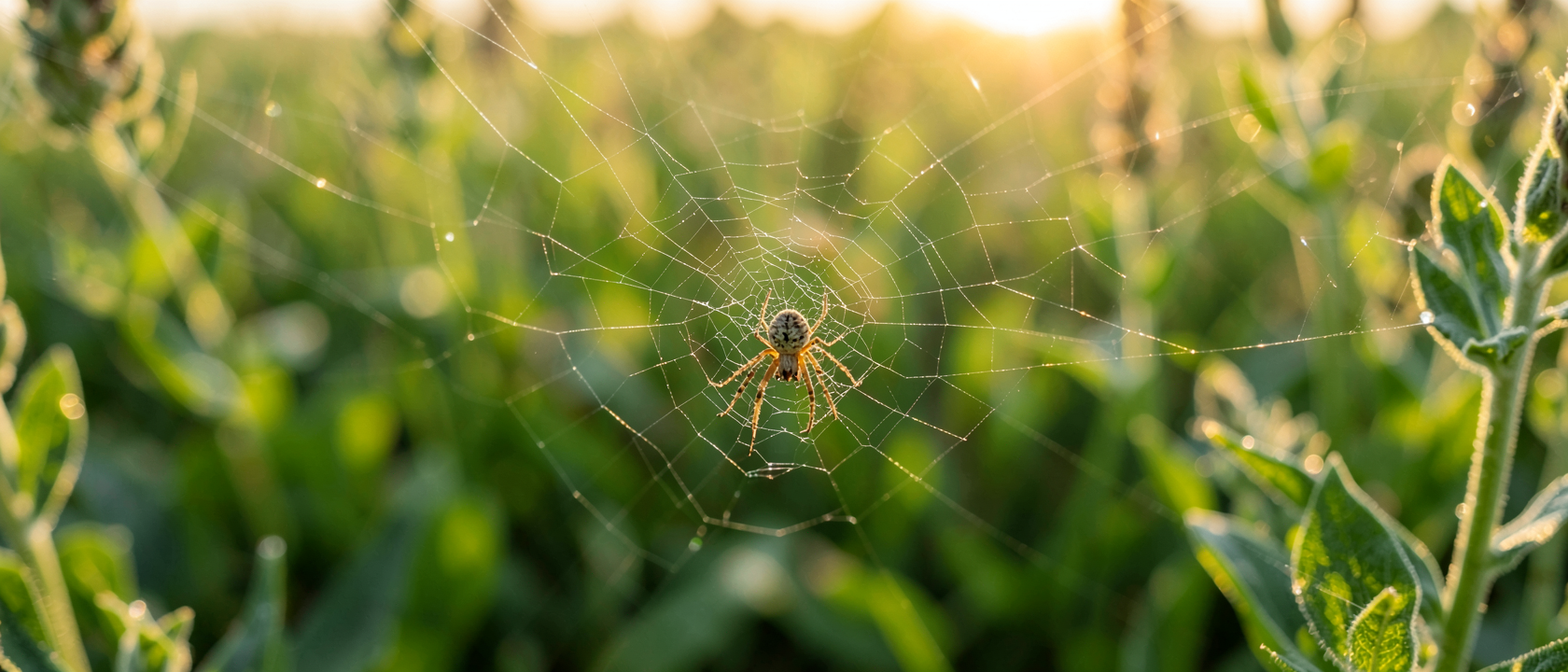
Heat up a generation of the dwarf spider Mermessus fradeorum, a sheetweb spider in the family Linyphiidae roughly 0.11 to 0.12 inch (2.9 to 3.1 mm) long, and nothing happens to it. The spiderlings that felt the warmth grow into adults with the usual sex ratio: overwhelmingly female, no visible change. Then, two generations later, in spiders that were never warmed a single day of their lives, males start showing up again.
That is the finding of a study led by Prof. Yuval Gottlieb-Dror and PhD student Virginija Mackevicius-Dubickaja at the Koret School of Veterinary Medicine, Hebrew University of Jerusalem, with Prof. Jen White of the University of Kentucky and Prof. Matt Doremus of the University of Illinois, published in Molecular Ecology on May 8, 2026. One line of spiders was reared continuously at 68°F (20°C). Against it, the researchers ran two separate warm-rearing experiments, each applying heat for exactly one generation, the F1s, before returning every later generation to 68°F. In the first experiment, the F1 spiders cycled daily between 80.6°F and 75.2°F (27°C and 24°C), mimicking a hot day followed by a cooler night. In the second, a separate line of F1 spiders was held at a constant 82.4°F (28°C). The heated spiders themselves, in both experiments, came out fine. Their grandchildren did not.
Inside the Spider: A Bacterial Turf War
Mermessus fradeorum can carry up to five bacteria, each passed down from mother to offspring, and one of them, a strain of Wolbachia called W1, feminizes the spider: it turns genetic males into females, which only helps W1 spread faster, since only mothers pass it on. In the wild, W1 never takes over completely. It holds at what the paper calls intermediate frequencies, like something keeps a lid on it.
The heat pulse turned out to be that lid, and it worked in a strange order. Short term, Wolbachia levels inside the heated spiders actually spiked. But the bacterium’s ability to get itself into the next generation’s eggs dropped. A second symbiont, Tisiphia, disappeared entirely from every warm-treated line. Into that gap moved a third bacterium, Rickettsiella, which surged in abundance the following generation. Spiders carrying more Rickettsiella showed weaker feminization, as if the two bacteria were competing for the same real estate inside the spider, and Rickettsiella was winning it.
Why the Spider Needs This Switch
Whether a spider turns female seems to depend less on whether Wolbachia is present and more on whether it is winning the argument. A companion study from the same research group found that spiders infected with both W1 and a second strain, W3, produced about 10% more females than spiders lacking W3, and that spiders carrying all five symbionts at once were feminized almost completely. Multiple Wolbachia strains running together kept the whole microbial community steadier, and those spiders returned to female-heavy sex ratios faster once the heat pulse had passed.
The researchers propose, as an interpretation rather than a settled conclusion, that this might be the function of the whole mechanism: an occasional burst of heat destabilizes Wolbachia’s grip just long enough to let a rival bacterium back in, which stops a feminizing symbiont from ever converting a population down to zero males. Not a flaw in the system. A ceiling built into it.
The Myth This Kills
The obvious assumption is that a stressed body carries its own scars, that if you heat an animal, the damage shows up in that animal. Here, the heated generation shows nothing. No shift in sex ratio, no visible effect, full stop. The consequence lands two generations later, in spiders that spent their entire lives at a mild 68°F, inside a microbial collapse they never personally triggered. The stress did not mark the body that felt it. It skipped a generation entirely, as far as the data is concerned, and landed on grandchildren who were nowhere near the heat.
What Nobody Knows Yet
The paper does not report how many spiders were tested in each line, so how reliable this two-generation delay is across a larger population is still unclear. The researchers also ran controlled heat pulses in a lab, not the rise and fall of temperature across an actual field season, and a fluctuating summer outdoors could play out very differently from a single clean spike or cycle. Nobody has yet identified the biological switch that makes the disruption wait two generations to surface, instead of showing up immediately in the heated spiders, or never showing up at all.