
The Break-In Nobody Reports
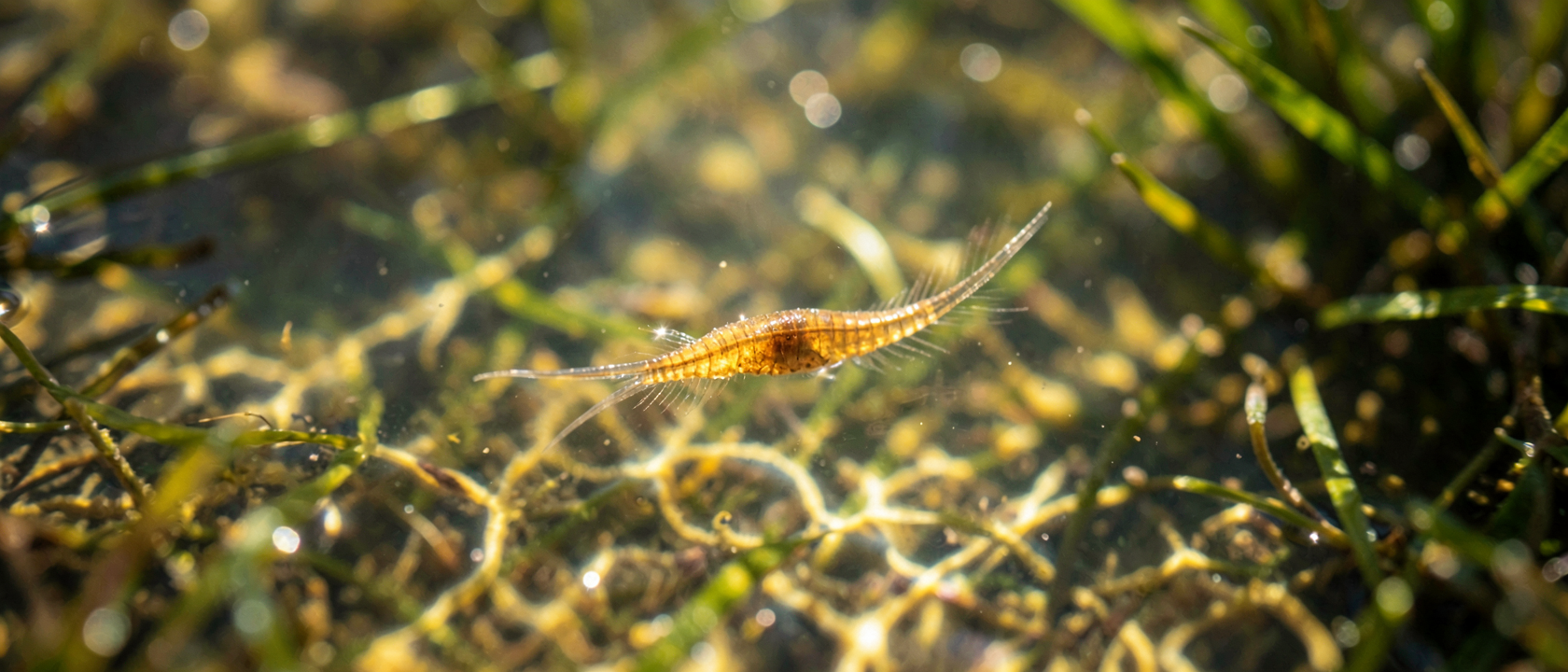
A parasite can drill through your skin in minutes and your body will not tell you it happened. The blood fluke Schistosoma mansoni starts life as a cercaria, a microscopic, fork-tailed larva that hatches from an infected freshwater snail and swims until it finds a patch of skin worth invading. Step into a contaminated pond or irrigation canal and it goes to work: creeping across the surface, testing the site, then pushing in.
Compare that to almost anything else that breaches skin. Hookworm larvae cause “ground itch,” a burning, inflamed welt at the entry point. Mosquito saliva raises a wheal within minutes. Even a splinter gets a flare of redness as the immune system notices. S. mansoni gets none of that. It gets in clean, as if the alarm had already been switched off before it ever touched the door.
How It Switches Off the Alarm
Skin is wired with sensory neurons carrying a receptor called TRPV1, short for Transient Receptor Potential Vanilloid 1. It is the same protein that makes chili peppers burn and sunburn sting, and it is the reason a splinter announces itself before you have even found it. TRPV1-positive neurons are the body’s early-warning system for heat, pain and itch.
A study led by Dr. De’Broski R. Herbert at Tulane University School of Medicine, published in The Journal of Immunology in August 2025, found that S. mansoni interferes with that system directly. Mice infected percutaneously (through the skin) with the cercariae showed significantly reduced thermal pain sensitivity in the TRPV1 pathway afterward. Sensory neurons isolated from infected mice released far less calcium and far fewer neuropeptides in response to capsaicin, the compound that normally sets TRPV1 off, than neurons from uninfected mice. The receptor was still there. It just was not firing the way it should.
This is not the worm hiding physically or moving fast enough to avoid detection. It is the worm’s chemistry getting there first and dialing the sensor down before it can ring.
Why Silence Beats Speed
TRPV1 does more than tell the brain something hurts. The Tulane team’s gain- and loss-of-function experiments showed the receptor’s activation is necessary and sufficient to mobilize a local counterattack: it drives proliferation and cytokine output from dermal γδ T cells (a subset of T cells found in skin and gut tissue that respond fast, without needing to first recognize a specific target) and CD4+ helper T cells, and it pulls in neutrophils and monocytes, the immune system’s first responders. In one experiment using optogenetics (triggering neurons with light instead of a chemical), switching TRPV1 neurons on directly enriched the skin’s γδ T cell population toward an IL-17-producing state, with those cells making up 77% of the response and CD4+ T helper cells another 12%.
Pain and itch double as a recruitment signal, a flare sent up the moment something breaches the skin, calling in the cells that resist further entry. A worm that sets that flare off risks getting stopped at the border. The Tulane researchers propose that S. mansoni lineages built to mute the signal rather than outrun or overwhelm it would have an obvious survival edge, a case of chemical sabotage beating brute force.
The Myth This Kills
The natural assumption is that anything crawling into your skin has to give itself away, that pain and itching are a dependable tripwire against invasion. S. mansoni is the counterexample. The Tulane study was built specifically around the idea that this worm evolved to suppress the very TRPV1 signaling that would otherwise trigger protective inflammation and block it from getting in. A parasite does not need to overpower your defenses if it can quietly turn off the switch that calls them.
That reframes “no symptoms” as something worth a second look rather than automatic reassurance. The absence of a warning sign is not proof nothing is happening. Sometimes it is the more sophisticated move.
What Nobody’s Found Yet
The molecule or molecules S. mansoni secretes to suppress TRPV1 have not been identified. Researchers involved in the work have noted that isolating them could matter well beyond parasitology, potentially pointing toward pain-blocking compounds that work differently from opioids, but that is a future direction, not a result in hand.
It is also not yet known exactly which γδ T cell subsets are being blocked from responding, only that the overall γδ T cell response is affected. And the broader question is wide open: does this worm represent a one-off trick, or have other skin-penetrating helminths independently evolved to silence sensory neurons the same way? Nobody has mapped that yet.
From the Worm’s Side
As far as S. mansoni is concerned, your skin’s nervous system is a house alarm it has already disarmed before it walks in. No wheal, no itch, no flare of neutrophils rushing to the site. Just a receptor sitting there, present but silent, while the parasite finishes the job it started.