
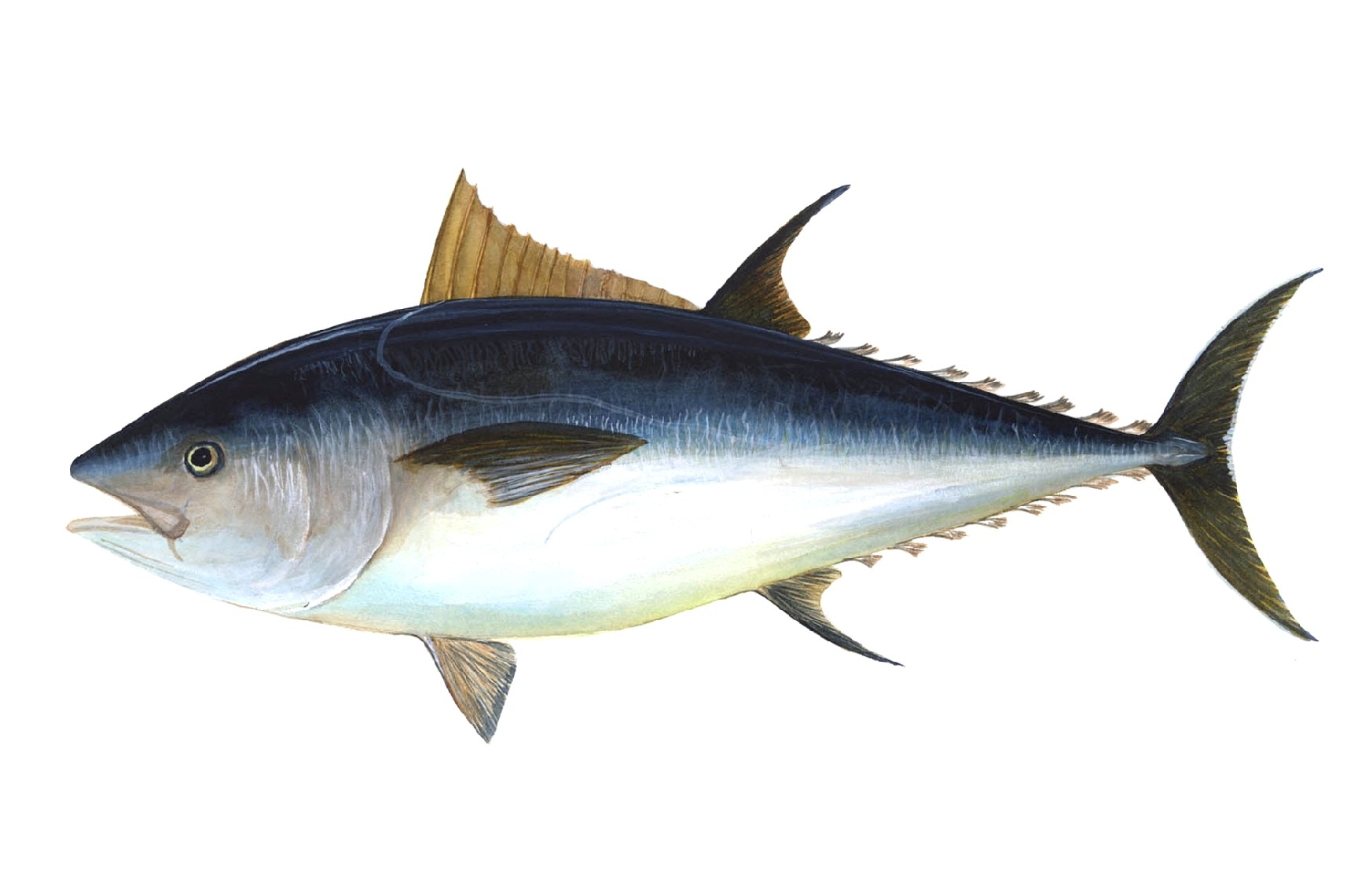
Thunnus thynnus, the Atlantic bluefin tuna, is a large pelagic fish in the family Scombridae, formally described by Carl Linnaeus in 1758 under the binomial Scomber thynnus and later placed in the genus Thunnus. What separates it from the vast majority of bony fish is endothermy: it generates its own body heat through swimming and maintains internal temperatures above that of the surrounding water using a countercurrent vascular heat-exchange system called the rete mirabile. The species ranges across the entire North Atlantic, from Labrador and Norway in the north to northern Brazil and the Gulf of Mexico, and throughout the Mediterranean Sea. In January 2026, a single 243-kilogram specimen sold at Tokyo’s Toyosu Market New Year auction for 510 million yen (approximately $3.24 million), or roughly $6,060 per pound, making the price of this fish as extreme as its biology.
Key facts
- Scientific name: Thunnus thynnus
- Kingdom: Animalia
- Phylum: Chordata
- Order: Perciformes
- Family: Scombridae
- Genus: Thunnus
- Taxonomic rank: species
Identification and anatomy
The upper body of Atlantic bluefin tuna is metallic blue or dark blue, blending to silver-white on the lower sides and belly, providing countershading camouflage.
One of the clearest field marks is the pectoral fin, which extends only as far back as the eleventh or twelfth spine of the first dorsal fin. That short reach distinguishes Thunnus thynnus from several other tunas. The species also carries 34 to 43 gill rakers on the first arch, the highest gill raker count recorded in the genus Thunnus. The caudal keel is black in adults and semi-transparent in immature fish, giving a straightforward age indicator visible on a fresh specimen.
Inside the skull, tuna possess a pineal window: a translucent patch of skin on top of the head through which a cartilaginous tube passes light to the pineal organ, a brain structure containing light-sensing cells. This structure is thought to be involved in navigation, though the precise mechanism remains open.
Physiology: endothermy and cardiovascular capacity
Almost all fish are ectothermic, taking on the temperature of the water around them. Atlantic bluefin tuna are the opposite. The rete mirabile, a mesh of tightly interleaved arteries and veins, recovers heat from venous blood before it reaches the gills, keeping the core and swimming muscles warmer than the sea. This warm musculature contracts faster, enabling speeds and endurance that cold-bodied fish cannot match.
The cardiovascular system matches that demand. Tuna blood carries double or even triple the haemoglobin concentration found in other fish, and the heart is several times larger relative to body size. Tagging data show individual Atlantic bluefin tuna crossing the Atlantic Ocean in as little as 60 days, with multiple round-trip migrations between eastern and western Atlantic recorded for single fish.
Diet and schooling behaviour
Atlantic bluefin tuna are visual predators. Their recorded prey includes small schooling fishes such as anchovies, sauries, and hakes, as well as squid and red crabs. Individuals have also been observed filter-feeding on zooplankton and consuming kelp, a breadth of diet unusual for a top predator.
The species is pelagic and schooling, with individuals grouping by size. Mixed-species aggregations occur: Atlantic bluefin tuna sometimes school alongside albacore, yellowfin, bigeye, and skipjack tuna.
Reproduction and growth
Two confirmed spawning grounds exist for Thunnus thynnus. The western stock spawns in the Gulf of Mexico between mid-April and mid-June; the eastern stock spawns in the Mediterranean Sea from May through August. Western stock females reach maturity at around age 8 and release approximately 30 million eggs per spawning event. Eggs and larvae are pelagic.
At 24 degrees Celsius, embryo development takes approximately 32 hours. Eggs measure 1.0 mm; larvae hatch at 2.8 mm in length and spend roughly 30 days in the larval stage.
Growth is rapid early in life: juveniles add approximately 30 cm per year initially. Adults grow far more slowly, taking about 10 years to reach two thirds of their maximum length. FishBase records a maximum reported age of 32 years, while the upper bound from other sources places potential longevity at 40 years. Generation time is estimated at 12.8 years, with a range of 9.2 to 16.3 years.
Taxonomy and evolutionary relationships
Linnaeus placed the species in Scomber as Scomber thynnus in the 10th edition of Systema Naturae in 1758. After the genus Thunnus was erected, the binomial became Thunnus thynnus. Synonyms accumulated over the following decades, including Thunnus vulgaris (Cuvier, 1832) and Thynnus mediterraneus (Risso, 1827), before Thunnus thynnus was adopted as the valid accepted name.
The closest relative of Atlantic bluefin tuna is the Pacific bluefin tuna (Thunnus orientalis). Together they are the largest living members of the genus. Phylotranscriptomic work published in 2025 shows that the three bluefin species are paraphyletic: the similarities between northern and southern bluefins are partly the result of convergent evolution rather than shared recent ancestry.
Genomics
A reference genome assembly for Atlantic bluefin tuna published by Oomen et al. in Wellcome Open Research in March 2025 has a total length of 799.05 megabases. Of that sequence, 99.17% is scaffolded into 24 chromosomal pseudomolecules, and 23,266 protein-coding genes are annotated. The assembly provides a baseline for population genetics, stock assessment, and the study of the molecular basis of endothermy in the species.
History of fishing and conservation status
Atlantic bluefin tuna have been fished in the Mediterranean for approximately 3,000 years. Coins minted in Gadir (present-day Cádiz) bear tuna images, and ancient Greek tradition held the fish worthy of sacrifice to Poseidon. That long commercial history contributed to severe population declines through the twentieth century.
The eastern Atlantic and Mediterranean spawning stock biomass reached what assessments recorded as a historic high of approximately 144,000 tons in 2022, recovering from critical lows in the late 1990s.
Ranching of Mediterranean bluefin tuna, in which wild juveniles are caught and fattened in net pens, grew from approximately 55,000 tuna per year in 2003 to approximately one million tuna per year by 2024. The expansion raises concerns about fish being removed from the wild population before they reach reproductive age, potentially undermining stock recovery.
Did you know
- Bluefin tuna are such powerful endotherms that if forced to exert themselves for hours, as when fighting a fishing line, they can cook themselves from the inside. Fishermen call the result “burn”: the flesh becomes worthless. (blueplanetsociety.org)
- Tuna blood carries double or even triple the haemoglobin concentration found in other fish, and the tuna heart is several times larger relative to body size than in comparable fish. These two features together power the species’ capacity for sustained high-speed, long-distance movement. (blueplanetsociety.org)
- Juvenile bluefin tuna grow at roughly 30 cm per year in their early years, but the growth rate drops sharply as the fish age. An adult bluefin needs about 10 years simply to reach two thirds of its maximum length. (fishbase.se)
- By 2024, Mediterranean bluefin tuna ranching operations were processing approximately one million fish per year, up from around 55,000 per year in 2003. Because ranched fish are typically caught as juveniles, before they have reproduced, the scale of the industry raises direct questions about how much pressure it places on the same wild stocks that quota management has worked to rebuild. (wickedleeks.riverford.co.uk)
Data sources
- GBIF
- Wikidata
- marinebio.org
- identifyfish.blogspot.com
- scienceinsights.org
- fishbase.se
- animaldiversity.org
- oceanconservancy.org
- scienceandthesea.org
- baike.baidu.com
- biorxiv.org
- bajaaquafarms.com
- asmr.education
- foxbusiness.com
- ncbi.nlm.nih.gov
Data updated: 2026-10-28