
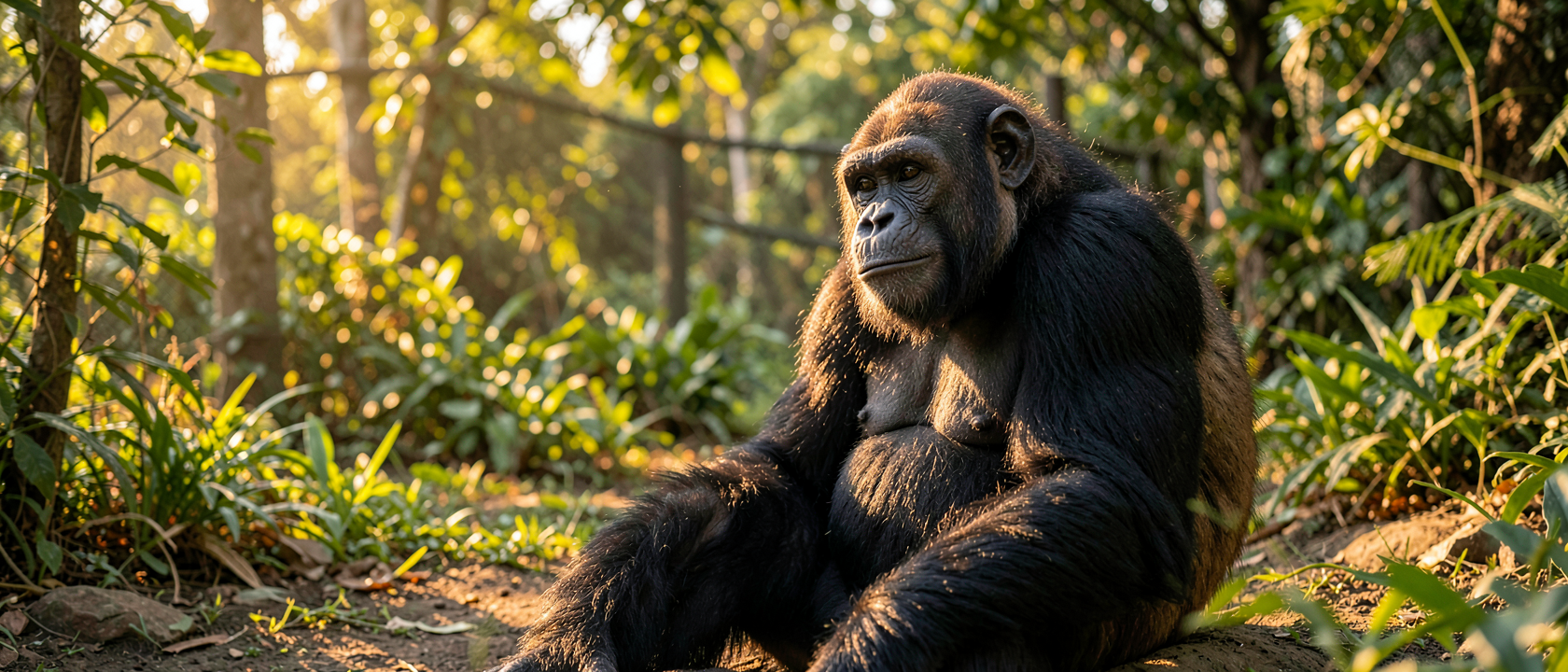
The chimpanzees who helped identify hepatitis C, cured of it decades later
Eight chimpanzees (Pan troglodytes) at Kumamoto Sanctuary in Kumamoto, Japan, carried hepatitis C virus for decades, an infection given to them deliberately, at several institutions across the country, so scientists could study a pathogen nobody could yet name. That work helped identify hepatitis C virus in 1989. Four males and four females, aged 35 to 50 years when treatment finally began, had lived with the virus for a median of 36 years, one of them for 43. In a study published July 20, 2026, in the Journal of Medical Virology, a team led by Satoshi Hirata at Kyoto University’s Wildlife Research Center treated all eight with the same antiviral drugs used to cure hepatitis C in people. Six of the eight cleared the virus completely. None of it was covered by a research grant; the medication was too expensive to buy that way, so the team paid for it through two separate crowdfunding campaigns.
How you dose a chimpanzee
You cannot hand a chimpanzee a pill and a glass of water. Hirata’s team crushed the human tablets, direct-acting antivirals, into powder and folded it into steamed sweet potato balls, or dissolved it into juice. All eight chimpanzees carried the same viral strain, genotype 1b, which responds well to these drugs in human patients, though nobody had tried them on a chimpanzee before. Treatment length was set individually, tracked by blood tests on each animal’s liver condition: three chimpanzees needed eight weeks, four needed twelve, one needed twenty-four. The pharmacology is the same one that has cured hepatitis C in human patients worldwide. The delivery system is a snack an animal eats without noticing anything is wrong.
It also overturns an old assumption. For years, the working belief was that hepatitis C ran a milder course in chimpanzees than in people, with only five documented liver cancer cases in the species and no confirmed cirrhosis on record. Six of eight clearing a decades-old infection on the same drugs used in human medicine suggests the virus was never uniquely mild in chimpanzees, either. It just hadn’t been treated, or watched closely enough to know what it was actually doing.
Why it mattered beyond curing the virus
In the six chimpanzees who cleared the infection, liver function and other health markers improved afterward, the paper reports. That builds on a 2022 study from the same Kyoto University group, which followed 120 chimpanzees at a single Japanese institution and found that the 22 who carried chronic hepatitis C had a higher mortality risk than those who didn’t, along with elevated levels of a liver enzyme tied to liver damage, even though none in that group had died of hepatic disease outright.
None of the eight will be released. Kumamoto Sanctuary is where they will live out their lives; invasive research on chimpanzees stopped across Japan in 2006, long after these particular infections were established. Hirata, in the release announcing the results, pointed to chimpanzees still living with chronic hepatitis C in Europe and the United States and said he hopes the study becomes a catalyst for improving their welfare. That’s a wish aimed outward, at animals this team doesn’t treat, not an explanation of why Kumamoto’s own eight were finally treated. When one of the eight, a chimpanzee named Shobo, cleared the virus, the sanctuary marked it with a feast of mangoes and other fruits and vegetables, filmed and shared publicly. Charming, but it’s one animal’s party, not evidence of anything the study measured.
What’s still open
Two of the eight chimpanzees stayed virus-positive after treatment. The paper offers mutations associated with drug resistance as a possible explanation, but that is not confirmed, only the most likely one on offer. Separately, chimpanzees with chronic hepatitis C are still living in sanctuaries and facilities in Europe and the United States, according to Hirata, and there is no published plan for whether or when they will get the same treatment.
The anecdote that keeps this from being a clean win
Post-treatment liver scans on the Kumamoto chimpanzees found tumors in three of the six who had cleared the virus, including one with no cirrhosis on record at all. Two of those three had just been declared free of the infection that had marked them as research subjects for decades, and then died of liver cancer anyway. It is not the study’s headline number. It is what happened to two specific animals after the story looked finished. The researchers now recommend lifelong cancer surveillance for every chimpanzee ever exposed to the virus, which is itself an admission that nobody had been watching closely enough before this.