
The dolphins everyone photographs are barely having babies
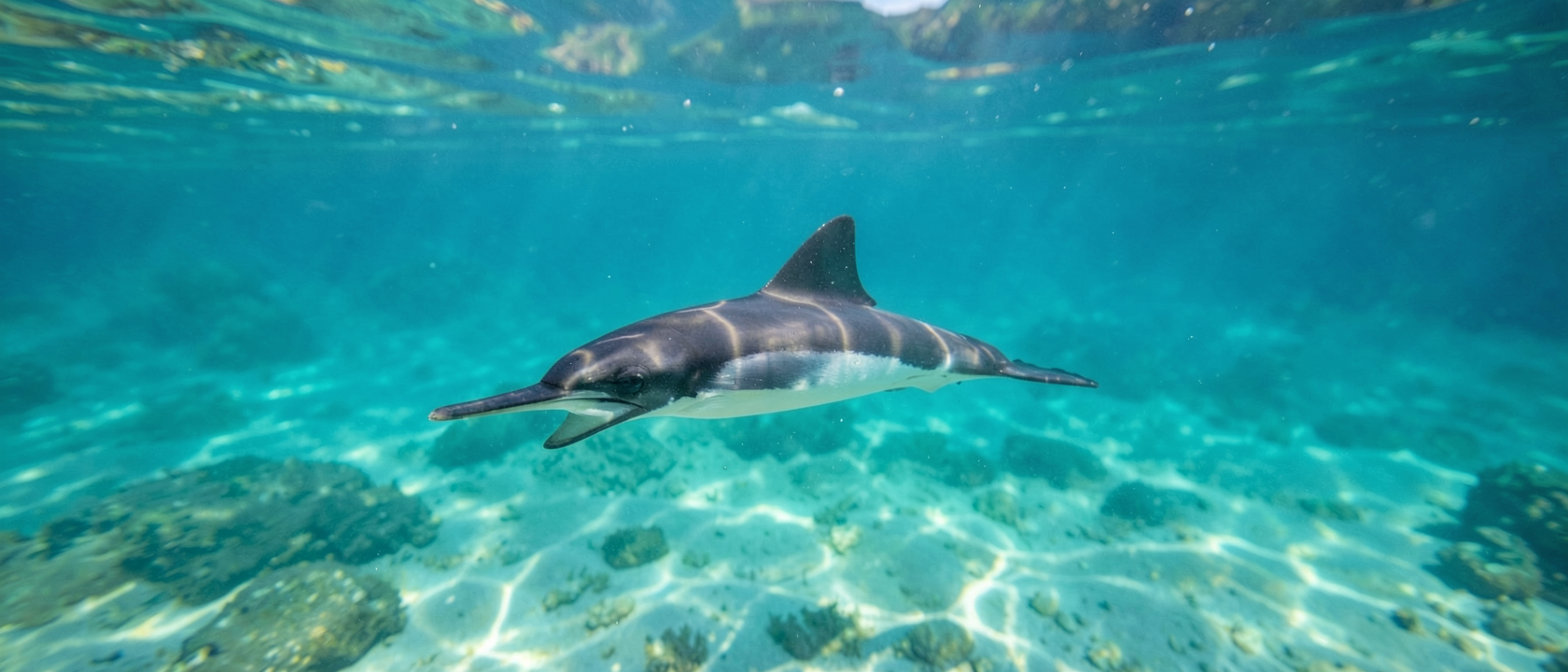
Calves make up only about 9% of the spinner dolphins living off Hawaiʻi Island, when a stable, healthy population of this species would be expected to run closer to 17% young. The animal in question is the Hawaiian spinner dolphin (Stenella longirostris, subspecies longirostris), a slim, long-beaked dolphin with a triangular dorsal fin and a gray-and-white tri-color body, found as an isolated resident stock around the Big Island and not interbreeding with the spinner dolphins of Oʻahu, Maui Nui, or the Northwest Hawaiian Islands. The 9% figure comes from a drone-photogrammetry study led by Fabien Vivier with the Marine Mammal Research Program at the University of Hawaiʻi at Mānoa, published in Endangered Species Research in 2026. It is not a count of a handful of animals filmed on a good day. It is a population-wide age structure, and the gap between 9% and 17% points to an unmeasured limit on births or calf survival that only this kind of systematic counting could reveal.
How you age a wild dolphin without ever touching it
You cannot run a cetacean through an X-ray machine in open water, so Vivier’s team built a workaround. Using age-length data collected from stranded spinner dolphins by Kristi West of the UH Health and Stranding Lab, animals whose true age could be confirmed after death from teeth and bone, the researchers produced the first age-length growth curve ever built for this specific population. That curve does the translating: feed in a body length in centimeters, and it returns an age in years.
From there, drones photographed free-swimming dolphins resting in their bays, and each measured length was sorted into one of three bins: calves under 2 years old, juveniles from 2 to 9 years, and adults over 9. Footage of resting dolphins became the raw material for a population census. All of it was collected under National Marine Fisheries Service permit number 21476, and it is the first time this kind of age structure has ever been measured for Hawaiʻi Island’s spinner dolphins.
Daytime rest, daytime traffic
Spinner dolphins hunt offshore at night, in deep water, chasing prey that rises toward the surface after dark. By day they move into shallow coastal bays to rest and socialize, recovery time after a night of work. Those same daylight hours, when the dolphins are closest to shore and easiest to find, are exactly when boats, swimmers, and tour groups come looking for them. This population already holds the record for the highest documented level of human disturbance measured for any dolphin population anywhere.
“The evidence suggests chronic human disturbance, especially tourism and recreational interactions during critical dolphin resting periods, as a likely contributing factor affecting reproductive success and calf survival,” Vivier said. Lars Bejder, co-author and director of the Marine Mammal Research Program, called the finding “one of the first population-level demographic signals suggesting those long-term disturbances may now be affecting reproduction and calf survival.” Less rest and more stress during the hours an animal needs to recover is a plausible route to fewer and weaker calves. It is the researchers’ proposed explanation, not yet a demonstrated mechanism.
Popular and thriving are not the same thing
Spinner dolphin tourism brings in more than $100 million a year for Hawaiʻi’s economy, and a 2013 estimate valued a single dolphin at over $3.3 million in lifetime tourism revenue. It would be easy to read that kind of commercial demand as a proxy for ecological health: an animal this photographed, this sought after, this economically prized, surely must be thriving. The age-structure data say the opposite can be true. A population can be extremely visible and extremely profitable while quietly failing to replace itself. The skewed calf ratio never shows up in a tour brochure or a single sighting. It only shows up in years of systematic counting, which is exactly what nobody had done here before 2026.
What nobody has proven yet
The link between tourist disturbance and the low calf count has not been established as cause and effect. It remains a likely contributing factor, named by the study’s authors, not a proven mechanism. A federal rule requiring vessels and swimmers to stay 50 yards (46 meters) from spinner dolphins took effect in 2021, but the Marine Mammal Commission and the Pacific Scientific Review Group have already flagged that distance as insufficient to protect daytime resting behavior. Vivier’s team has called for stronger measures, including time-area closures that would restrict human access to key resting bays during daylight hours, alongside continued long-term monitoring. Whether either gets adopted is undecided, and whether the continued tracking needed to confirm or rule out the disturbance link even happens depends on funding that does not yet exist.