
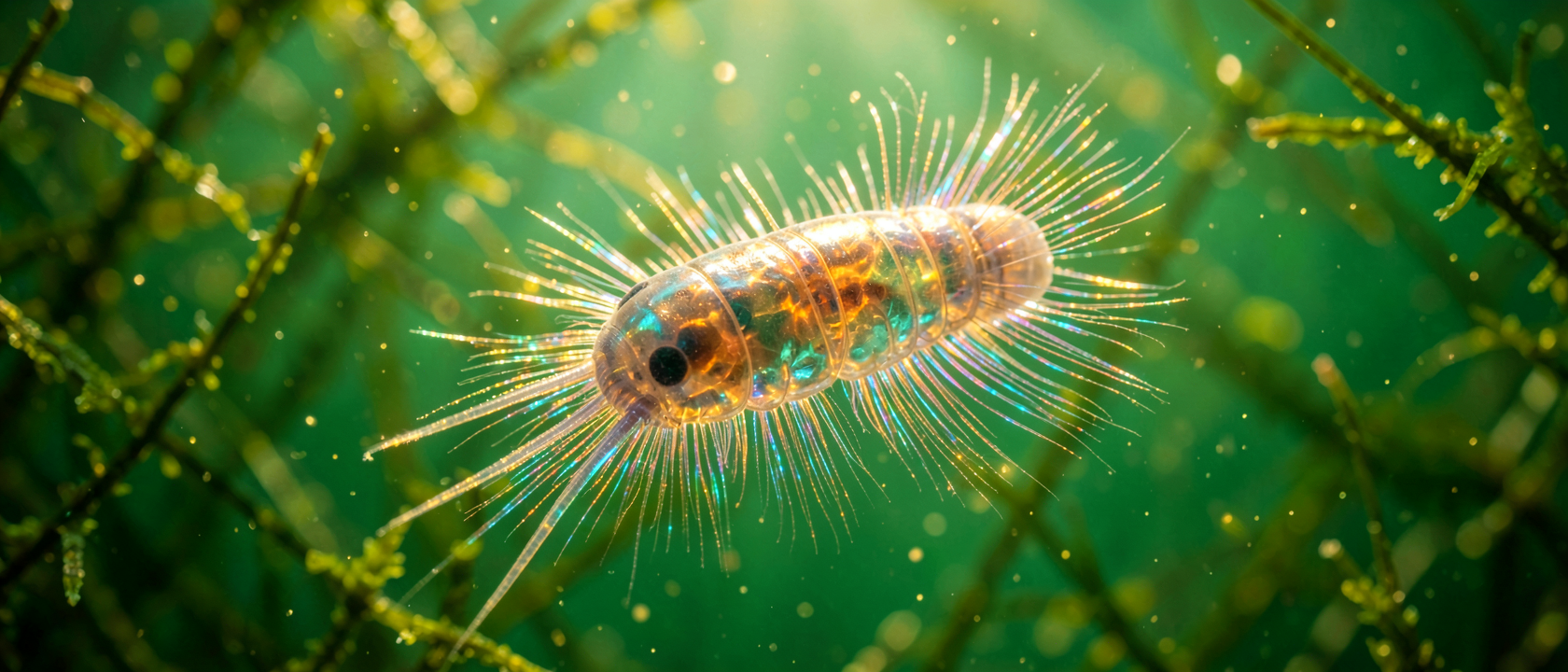
A tiny clone with a chemistry set
A microscopic freshwater animal, invisible to the naked eye, appears to brew its own antibiotic-style chemistry using genetic recipes it copied wholesale from bacteria. In a study published July 18, 2024 in Nature Communications, researchers Reuben Nowell, Fernando Rodriguez, Bette Hecox-Lea, David Mark Welch, Irina Arkhipova, Timothy Barraclough and Christopher Wilson, working across the University of Oxford, the University of Stirling and the Marine Biological Laboratory in Woods Hole, infected bdelloid rotifers with a fungal pathogen and tracked what the animals switched on in response. Bdelloid rotifers are tiny even by microscope standards, most measuring between 150 and 700 micrometers, showing up as pale specks in a drop of pond water, and turning up everywhere from rivers and lakes to bird baths, roof moss and rain puddles. When the researchers compared a pathogen-resistant rotifer species with a susceptible one, the resistant species ramped up its key antimicrobial gene clusters nearly ten times harder. The compound those genes build did not evolve inside a rotifer. It came from bacteria.
How a borrowed gene becomes a home remedy
The genes behind that compound are not rotifer inventions. They arrived by horizontal gene transfer, the wholesale copying of genetic material from one organism straight into the genome of an unrelated one, a route bacteria use routinely and animal evolution almost never does. Nowell and his co-authors found that genes rotifers had picked up this way were more than twice as likely to switch on during fungal infection as the rest of the genome, a stronger reaction than the animals showed to abiotic stress, meaning stress from non-living causes rather than disease. Among the genes that switched on, the ones that stood out most strongly resembled bacterial polyketide and non-ribosomal peptide synthetases, enzyme assembly lines that bacteria and fungi use to build antibiotics, the same general class of molecule behind drugs like penicillin and vancomycin. Non-ribosomal means the peptide chain is not built by reading an RNA template the way ordinary proteins are. The enzyme itself strings the amino acids together in a fixed order, a machine running a recipe rather than reading one off a blueprint. The rotifer never evolved that machinery on its own. It took the whole gene from a microbe it once shared water with, kept the copies that worked, and now switches them on the moment a fungal infection takes hold, and it is this same gene family that the resistant species pushed nearly ten times harder than the susceptible one.
Cloning doesn’t give you new tricks. Stealing genes does.
Bdelloid rotifers reproduce only by parthenogenesis: mothers clone themselves, no male has ever been documented in the group, and every daughter is a genetic copy of her mother. That is normally a liability against disease. Sexual reproduction shuffles genes from two parents and hands a population fresh combinations to test against new pathogens; a population of identical clones cannot do that, and one sufficiently good fungal strain should, in theory, be able to wipe out an entire bdelloid lineage in one pass. Study co-author Timothy Barraclough and his colleagues propose that heavy borrowing of foreign genes is how rotifers get around this. Instead of generating variety by recombining their own genes, they import variety ready-made from bacteria they have lived alongside for generations, assembling a chemical toolkit no single rotifer ancestor could have evolved alone. The stolen genes, on this reading, are not clutter in a messy genome. They are what a clone does instead of having sex, and the gap between a resistant species and a susceptible one may come down to how hard each lineage has learned to run those borrowed genes.
The myth this kills
The standard assumption has been that making antibiotics is bacterial and fungal business, and that animals are simply the hosts who catch infections, get treated, or die. The Nature Communications findings contradict that directly: an animal is manufacturing an antibiotic-style compound inside its own cells, using genetic instructions it lifted from the microbes sharing its water. It goes further than that. The rotifer copies of these genes have drifted in sequence from their bacterial originals over evolutionary time, and the authors note this raises the possibility that bdelloids are producing antimicrobial chemistry that no bacterium or fungus alive today makes. A rotifer, on this evidence, is not a passive container waiting to be infected. It is running its own, slightly rewritten version of a recipe bacteria wrote first.
What nobody knows yet
The study compared how hard one gene family gets switched on in a resistant species versus a susceptible one; it did not catalog every antimicrobial compound bdelloid rotifers can make. Their genomes likely carry instructions for other non-ribosomal peptides, and nobody has yet mapped the full catalog or pinned down what, besides fungal infection, might switch their production on. It is also unresolved why bdelloid rotifers, specifically, are such prolific gene-scavengers in the first place; some of their borrowed sequences resemble genes from plants, not only bacteria, which leaves open a bigger question about how often genetic material moves between completely unrelated branches of life. The paper’s authors describe their results as raising “the intriguing possibility of discovering new antimicrobial compounds in bdelloids,” but whether any rotifer-made chemical could ever work as a medicine in a human patient has not been tested. For now, the confirmed part is narrower, and strange enough on its own: an animal with no sex life and no obvious reason to be good at chemistry has been quietly running a bacterial-style drug factory inside a body smaller than a grain of salt. Noticing that difference, between what a species does and what it merely has, is the kind of thing that makes a pond-water speck worth a second look.