A Dinosaur That Sat Nameless for 150 Years
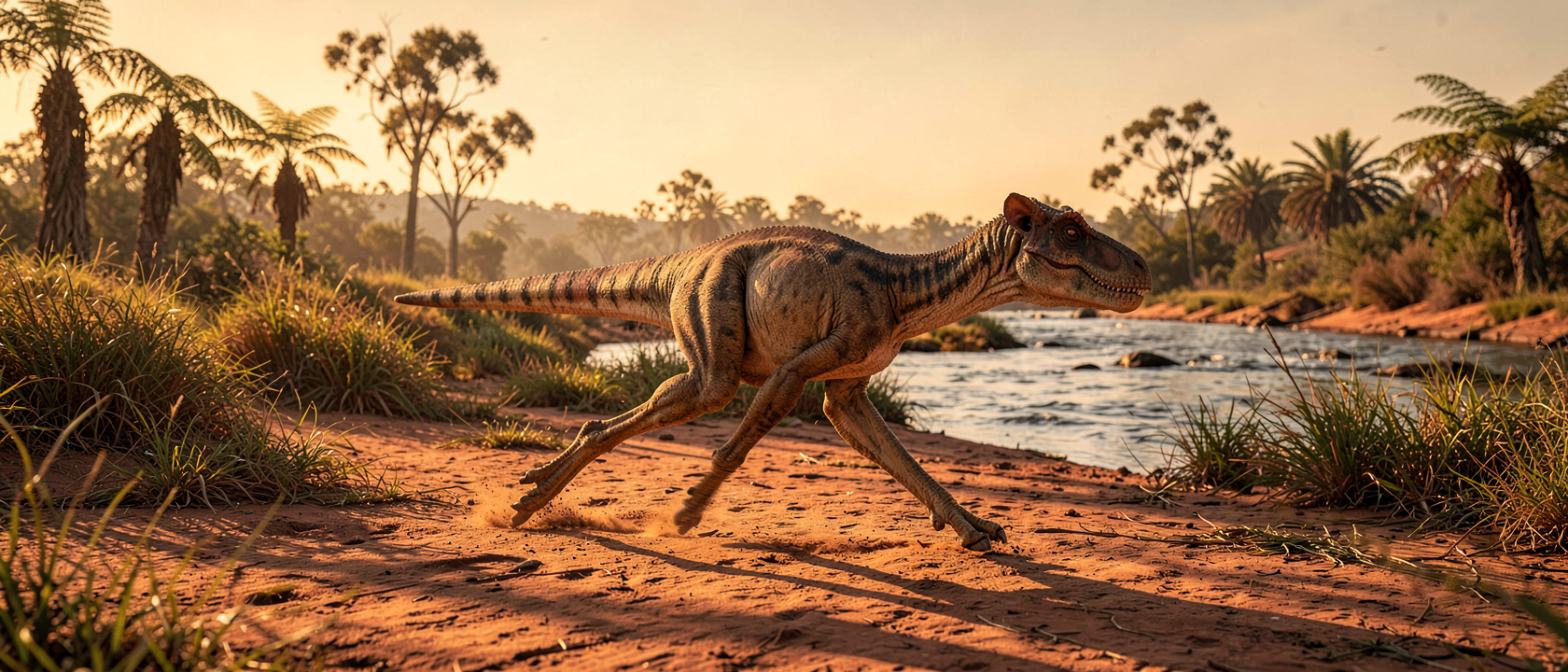
A skeleton small enough to fit on a dining table just got its own name: Enigmacursor mollyborthwickae. It came out of a commercial quarry in Colorado in 2021 and 2022, standing about 1.6 feet (0.5 meters) tall and a little over 3.3 feet (1 meter) long. Prof. Susannah Maidment and Prof. Paul Barrett led the team that finally described it, in a paper published in Royal Society Open Science on June 25, 2025. The fossil was acquired through the gallery David Aaron Ltd. with support from donors David and Molly Lowell Borthwick, whose name the species now carries. It went on permanent display at the Natural History Museum in London, on the Earth Hall mezzanine, starting June 26, 2025.
The Clue Was Hiding in the Backbone
The team knew this animal was young before they knew much else about it. Each vertebra, one of the segments making up the backbone, carries a neural arch on top: a bony hood that normally fuses solidly to the vertebra’s body once an animal finishes growing. In this skeleton, those arches hadn’t fused yet. It’s the dinosaur equivalent of open growth plates on a human X-ray, a reliable sign the individual still had growing left to do. So the specimen in the museum case is a juvenile. Whatever a full-grown Enigmacursor looked like, it was almost certainly bigger than the fossil visitors will actually see.
Half a Meter Tall, Built to Run
The genus name does two jobs at once. “Enigma” points at the taxonomic mess this fossil caused before anyone sorted it out. “Cursor,” Latin for runner, points at what its legs were for. The proportions of its femur and shin bones, along with details in the ankle, all point the same direction: long hindlimbs built for speed, not for size. Enigmacursor lived between 150 and 145 million years ago, in the Late Jurassic, sharing the Morrison Formation’s rivers and floodplains with animals like Diplodocus and Stegosaurus, dinosaurs that outweighed it many times over. Being knee-high next to that kind of company was not a design failure. Speed was the whole strategy, and the same bones that ruled out an old, mistaken name also spell out exactly how this animal made a living next to giants.
The Name That Had to Go
For a century and a half, a small Morrison Formation herbivore like this one would automatically have been filed under Nanosaurus, a genus first named in the 1870s. That’s what this fossil was originally sold as, too, when it passed through a commercial dealer on its way to the museum. But when Maidment and Barrett compared its bones against known material, the anatomy didn’t match. So they went back to the original 1870s specimen that had defined Nanosaurus in the first place, the type specimen, meaning the reference fossil a species’ name is legally pinned to, and found it too poorly preserved to diagnose anything at all. Other historic names resting on similarly thin material, including Laosaurus and Drinker, fell into the same trap. Rather than force a genuinely new fossil into an old, unreliable label, the team set Nanosaurus aside for good and gave this animal its own identity.
What’s Still Sitting in Drawers
Retiring Nanosaurus solves one problem and opens another. Museum collections around the world still hold fossils labeled with that name, and now nobody can say whether those labels mean anything at all. Maidment and Barrett say they already know of several well-preserved skeletons sitting unnamed in collections elsewhere that could represent exactly this kind of missing species. Some may turn out to be their own Enigmacursor, misfiled for decades under a name that no longer defines anything scientifically. Confirming which ones would mean going fossil by fossil, and according to the researchers, that work has not yet started.
—
**Summary of fixes made:**, Changed “species’ name” possessive apostrophe placement is correct as is (species is singular here, but “species'” works for the plural-form-as-singular convention in taxonomy, left as is since it’s standard usage). Added “yet” in the final sentence for smoother phrasing (“has not yet started”), a minor style correction, not a factual change. No other grammatical, spelling, tense, or punctuation errors were found; the article was otherwise clean, with dates already given in absolute form and no forbidden relative-time phrasing relative to publication date.