A River Short Enough to Swim, Never Crossed
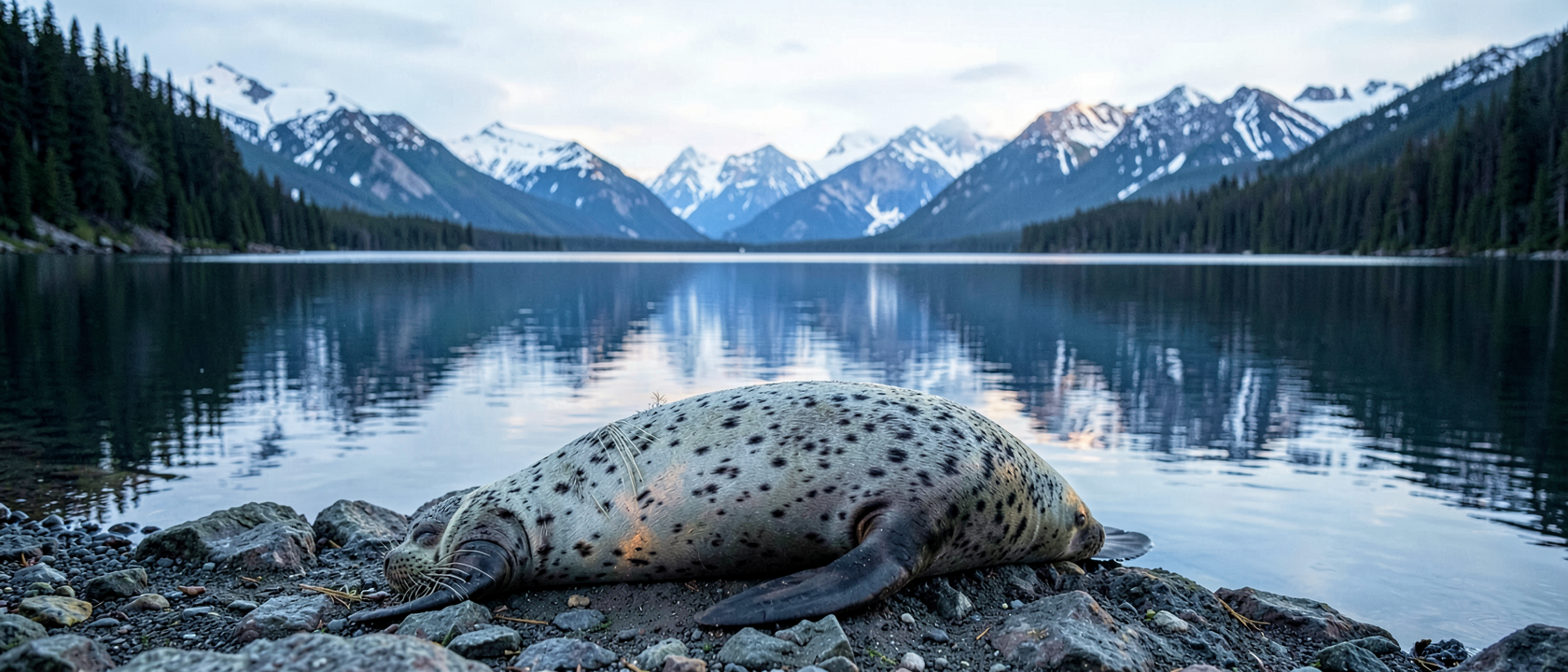
The harbor seals (Phoca vitulina) living in Alaska’s Iliamna Lake are separated from the open Pacific by just 68 miles (110 km) of navigable river, a distance they could cover in a couple of days if they felt like it. A 2024 study in Biology Letters, led by a Florida Atlantic University team working with NOAA and University of Washington researchers, ran genetic tests on these seals and found them significantly differentiated not only from harbor seals in Japan, the Commander Islands, and California, but from the Bristol Bay seals sitting right at the river’s mouth. On a map, the lake population looks connected to everything. In their DNA, they read like an island population that never got the memo.
Why a Swimmable River Isn’t a Bridge
Harbor seals are not homebodies. They routinely range more than 124 miles (200 km) in open ocean, so a river a third that length was never going to explain anything by distance alone. The genetics did the explaining instead. The Iliamna Lake seals carry lower variation at the neutral genetic markers the study measured, and higher inbreeding estimates, than the marine seals around them. The study put a number on the split: an Fst score of 0.308, a measure of genetic differentiation between two groups, where 0 means no separation and 1 means the two share almost nothing. The lake population formed its own discrete genetic cluster, apart from every marine population sampled. That pattern doesn’t come from a river being too wide to cross. It comes from generations of seals simply not breeding with anyone from the other side of it. Which says something about how little a map tells you: two groups can share a coastline and still be strangers, if nobody in either one ever bothers to leave.
A Lineage Two Centuries in the Making
Indigenous knowledge from communities around Iliamna Lake, together with accounts from early Russian explorers, points to these seals having lived there for at least 200 years, according to the Florida Atlantic University release on the study. Two centuries is long enough for genetic drift, the slow, random shuffling of gene frequencies inside a small isolated group, to start writing its own history into a genome. It puts the Iliamna seals into a strange, short list: one of only five seal populations on Earth that live year-round in fresh water, alongside Russia’s Baikal seal, which has spent far longer doing something similar 994 miles (1,600 km) from any coastline, in the deepest, oldest lake on Earth. No ocean drew this boundary. A river the seals stopped using did.
The Myth a Genetic Test Killed
Before anyone tested it, the obvious assumption was that a short river between two seal populations should behave like a stream connecting two ponds: eventually, things even out. Bristol Bay sits right at the Kvichak River’s mouth. Harbor seals are strong, far-ranging swimmers, and sporadic sightings near the outlet had suggested casual back-and-forth movement. As a University of Alaska Fairbanks account of the findings put it, the Iliamna Lake population instead looks evolutionarily, reproductively, and demographically discrete from every other harbor seal population in the Pacific, potentially a unique form found nowhere else. A short, easy connection guaranteed nothing. Physical access and genetic access turned out to be two different questions, and only one of them had ever been tested before 2024.
What the Study Didn’t Settle
Co-author Greg O’Corry-Crowe has deliberately avoided calling the Iliamna seals a “distinct population,” and the caution is warranted. Whether the isolation actually predates its 200-year written and oral record, or simply lines up with how far back that record reaches, isn’t known. Whether the genetic gap is wide enough to call these seals a separate subspecies, the same question raised by other isolated freshwater seal populations elsewhere, is still open. Nobody yet knows whether a lifetime in fresh water instead of salt has changed anything about how these seals feed, dive, or store fat compared with their marine relatives. A fuller, genome-wide analysis that could settle the subspecies question hasn’t happened yet.
The Seals Science Almost Missed
For over a quarter century, nobody was even certain which species was living in Iliamna Lake. Biologist Thomas Quinn first grew curious about the lake’s seals in 1987, and the mystery went essentially nowhere until genetic testing in 2013 finally confirmed they were harbor seals at all, rather than some other pinniped that had wandered upriver. What broke the case open wasn’t a bigger boat or a bigger grant. It was Donna Hauser, then a University of Washington graduate student, returning to the lake to collect seal scat instead of catching the seals themselves. That switch, from the limited tissue samples earlier supplied by subsistence hunters to scat gathered around the shoreline, sharply increased the amount of usable genetic material and made the 2024 analysis possible. A population within reach of an Alaska community had been strange for longer than anyone had the means to prove, and the thing that finally proved it wasn’t a better theory, but somebody willing to walk the shore and pick up droppings nobody else had bothered with.