The Number That Shouldn’t Exist
On April 3, 2026, New Zealand’s Department of Conservation announced that 105 kākāpō chicks had hatched from 256 eggs laid during the season, the best hatch count in the 30 years the agency has kept records on the species. Set that number against the total wild population before the season began: 235 birds. The chicks that hatched in a single season come out to nearly half the entire species alive at the time.
The World’s Heaviest Parrot
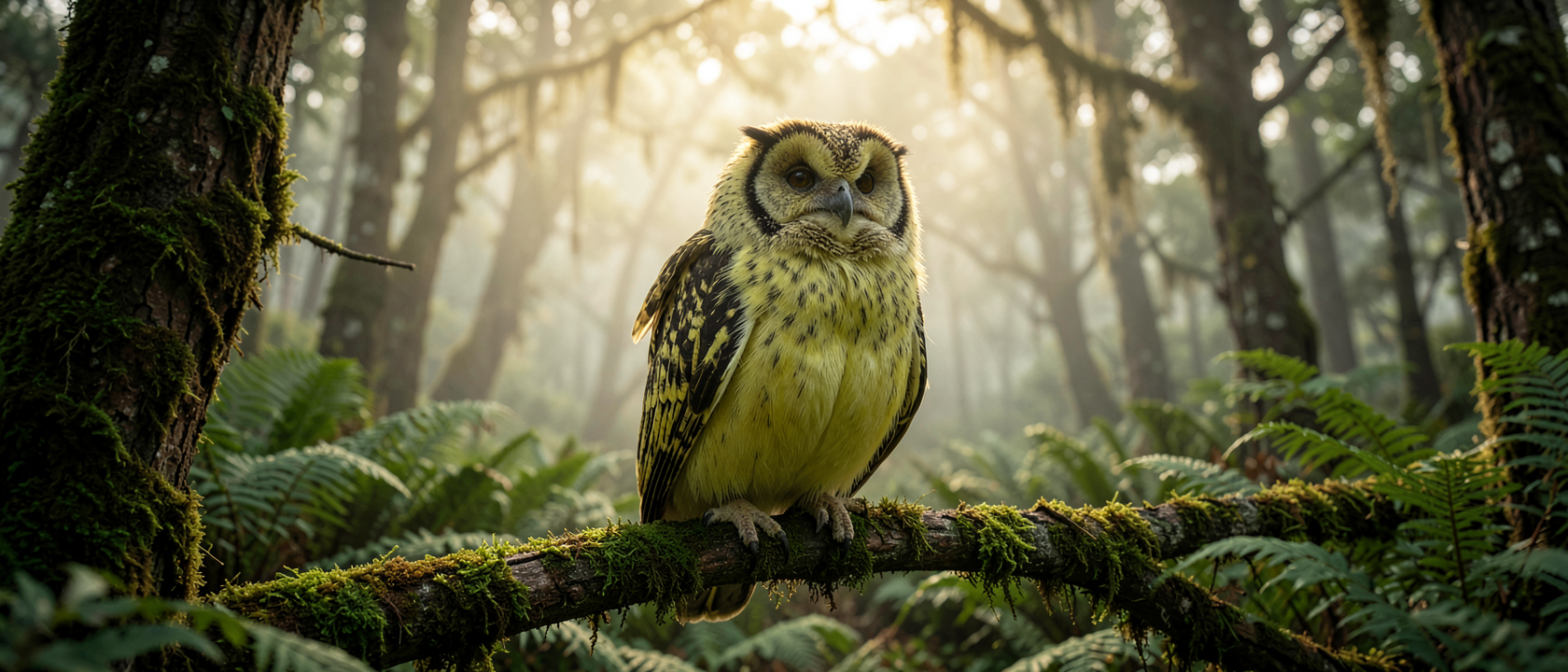
The kākāpō (Strigops habroptilus) is a flightless, nocturnal parrot that lives only on three small, predator-free islands off New Zealand’s southern coast. It’s the only flightless parrot species alive, and males can weigh up to 8.8 pounds (4 kilograms), officially the heaviest parrot on record, according to Guinness World Records. Unlike other parrots, it can pack on substantial body fat as an energy reserve, another trait that’s unique to the species. That size and ground-dwelling life came from evolving for millions of years on islands with no land predators; a kākāpō never needed wings to get away from anything. When humans introduced predators the bird had no defenses against, on top of hunting and habitat loss, the population collapsed to just 51 birds by 1995, and the species came close to disappearing entirely in the 1990s.
Why a Bird Waits Years for One Baby
Kākāpō breed only every two to four years, and the trigger isn’t a calendar, it’s a tree. Rimu forests occasionally mast, meaning they produce an enormous, irregular bumper crop of fruit, and that bonanza is what sets off the hormonal chain of events that lets kākāpō breed at all. In years without a mast, the birds simply don’t reproduce, no matter how healthy they are. Even in a mast year, most females raise only a single chick. A kākāpō doesn’t get many chances at parenthood in a lifetime, and each chance usually pays out one chick.
One Good Season Can Move a Whole Species
That rarity is exactly why 105 chicks carries so much weight. For a bird that breeds this seldom and this thinly, a single strong mast year has a kind of leverage over the species’ future that an ordinary season never could. Deidre Vercoe, the Department of Conservation’s operations manager for kākāpō, told Mongabay: “Every new chick brings the species further from the brink of extinction.” She added, “There’s always a sense of hope and optimism for the future.” For a population sitting at 235 birds, one good year can shift the odds of survival more than several ordinary ones stacked together.
What Nobody Knows Yet
A hatch count is not a survival count. By the time of the April update, seven of the 105 chicks had already died, and four had been flown to Dunedin Wildlife Hospital for treatment; one egg was still sitting in an incubator. Kākāpō chicks aren’t counted as independent adults until they reach 150 days old, a milestone this cohort reached around mid-July 2026. By then, according to a later report from the Otago Daily Times, only 90 chicks had made it that far, lifting the total kākāpō population from 235 to 325 birds. Even the hatch number kept shifting along the way: the April figure of 105 was revised to “at least 105,” then to a confirmed 106 after rangers pulled a previously unknown chick from a cliffside nest on Te Kākahu/Chalky Island in May. Counting a species this small, this remote, and this seasonal turns out to be its own ongoing project.
The Fifty-Day-Old Chick on the Podcast
On RNZ’s Kākāpō Files podcast, ranger Sarah Manktelow described that same cohort while it was still being tallied: seven dead, four in the hospital, and one chick already past 50 days old, the oldest of the bunch. It was one ranger’s snapshot of one record season, taken while a gangly, flightless kākāpō chick sat on some island off New Zealand’s southern coast, entirely unaware it belonged to the best breeding season its species has had in 30 years of being counted.