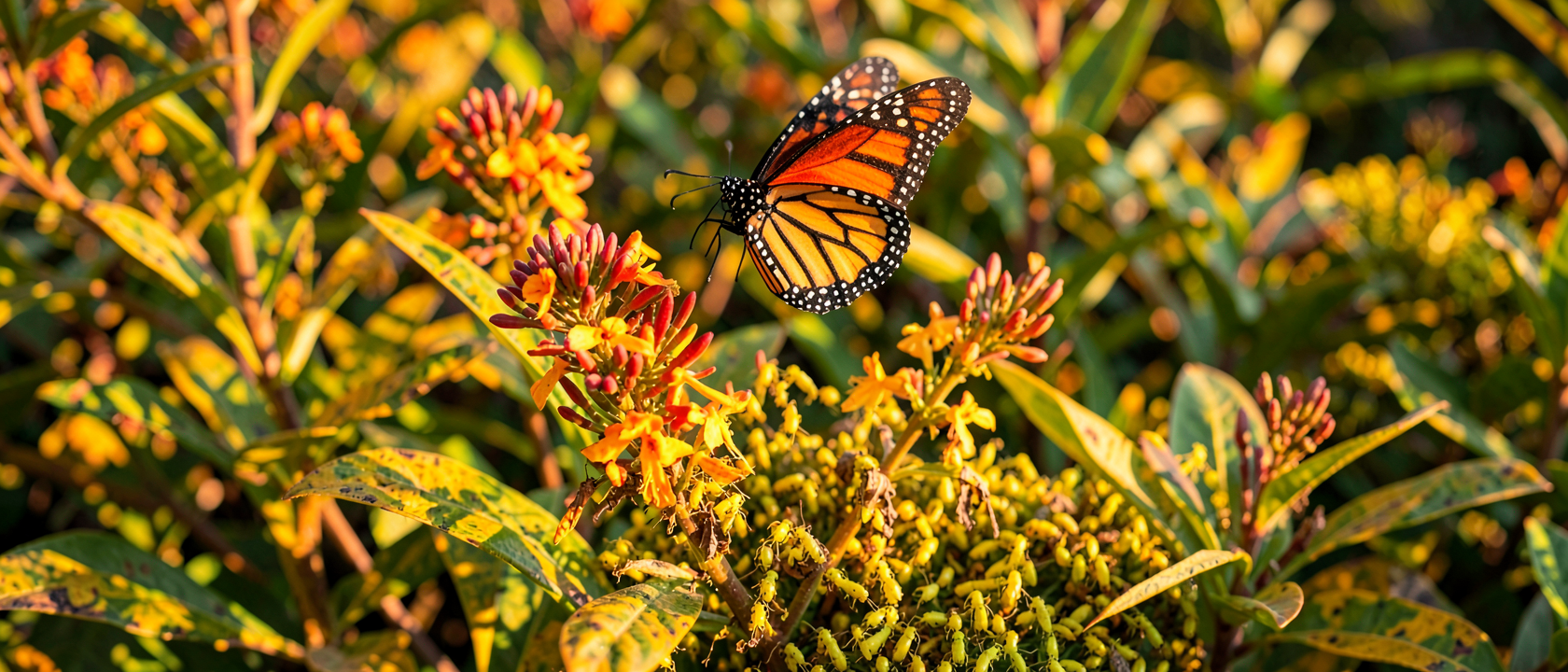
Monarch butterflies laid three times as many eggs on aphid-free tropical milkweed as they did on plants crawling with oleander aphids, according to a nursery study out of the University of Florida published in PLOS ONE in July 2023. Bernadette Mach, William Long, Jaret Daniels and Adam Dale ran the experiment in Gainesville, Florida: one set of tropical milkweed plants (Asclepias curassavica) was infested with oleander aphids (Aphis nerii), a small, bright yellow, sap-sucking insect that clusters densely on stems, while a matching set was kept clean. Then they released monarch butterflies around both groups and counted eggs. A January 2025 correction to the paper added detail about the monarch colony used, a mix of wild-caught insects and butterfly-farm stock, topped up regularly with wild monarchs from around Gainesville, but the original result held: infested plants got a third of the eggs the clean ones did.
What happened to the caterpillars that did hatch
The eggs that did land on infested plants did not turn into an even fight. Caterpillars raised on aphid-infested tropical milkweed ate and weighed only half as much as caterpillars raised on aphid-free plants of the same species. Every single caterpillar on the clean plants reached full size. Most of the ones on infested plants either grew slowly or died before getting there. Part of the problem was simple math: aphid-infested milkweed had lower total dry leaf biomass and less nitrogen than clean plants, on top of the leaf chlorosis, leaf senescence, and honeydew-fed sooty mold that heavy oleander aphid infestations are known to cause. A caterpillar on one of these plants was working with less food, and worse food, from the start.
Why aphids turn the plant against the butterfly
Milkweed sap is loaded with cardenolides, a class of cardiac glycosides (steroid compounds that interfere with heart muscle function) that the plant produces to poison the insects that try to eat it. Monarch caterpillars are the exception: they tolerate cardenolides, store them, and become toxic butterflies themselves. Tropical milkweed already runs unusually high in cardenolides compared to its native relatives. The study’s authors propose that an oleander aphid infestation pushes those cardenolide levels higher still, as the plant escalates its chemical defense against the aphids feeding on it. Monarchs, apparently sensing a leaf running hotter than the dose they’re built for, lay fewer eggs there, and the caterpillars that do hatch have to process tissue that has moved past what their biology was tuned to handle.
What this means for the butterfly you’re rooting for
The trick that makes a monarch caterpillar poisonous to a predator only works because monarchs evolved to run on a specific range of cardenolide exposure, not an open-ended one. Tropical milkweed, a non-native ornamental sold heavily across nurseries in the southern United States, already sits at the hot end of that range before a single aphid shows up. An infestation shoves the dose higher again, and a defense that has protected monarchs for a very long time turns into a plant a female won’t lay on and a caterpillar can’t finish growing up on. Whether a patch of milkweed actually helps the monarch population turns out to depend on more than whether milkweed is present. It depends on which milkweed, and what is living on it.
The myth this kills
Tropical milkweed is sold across garden centers in the southern United States as the default monarch-friendly plant, on the assumption that any milkweed in the ground is a win for the species. This study says otherwise. A pest-infested planting of exactly that milkweed cut monarch egg-laying to a third of what it was on clean plants of the same species, and left most of the caterpillars that hatched there stunted or dead. The plant most often marketed as a monarch rescue can, under ordinary nursery pest pressure, work against the butterfly it was bought for.
What’s still open
Nobody in this study actually measured cardenolide concentrations in the infested versus the clean plants. The aphid-to-toxin chain is an inference, built by combining these results with earlier research on milkweed chemistry, not a direct measurement taken here. The authors also flag that spraying aphids off milkweed isn’t a clean fix: other work from the same lab found that even reduced-risk insecticides used to control aphids can still harm monarch larvae. Their planned next step, testing non-insecticidal ways to keep oleander aphid numbers down without hurting monarchs, had not been carried out at the time of publication. The gap between “aphids showed up” and “cardenolides spiked” is real, and it stays open.