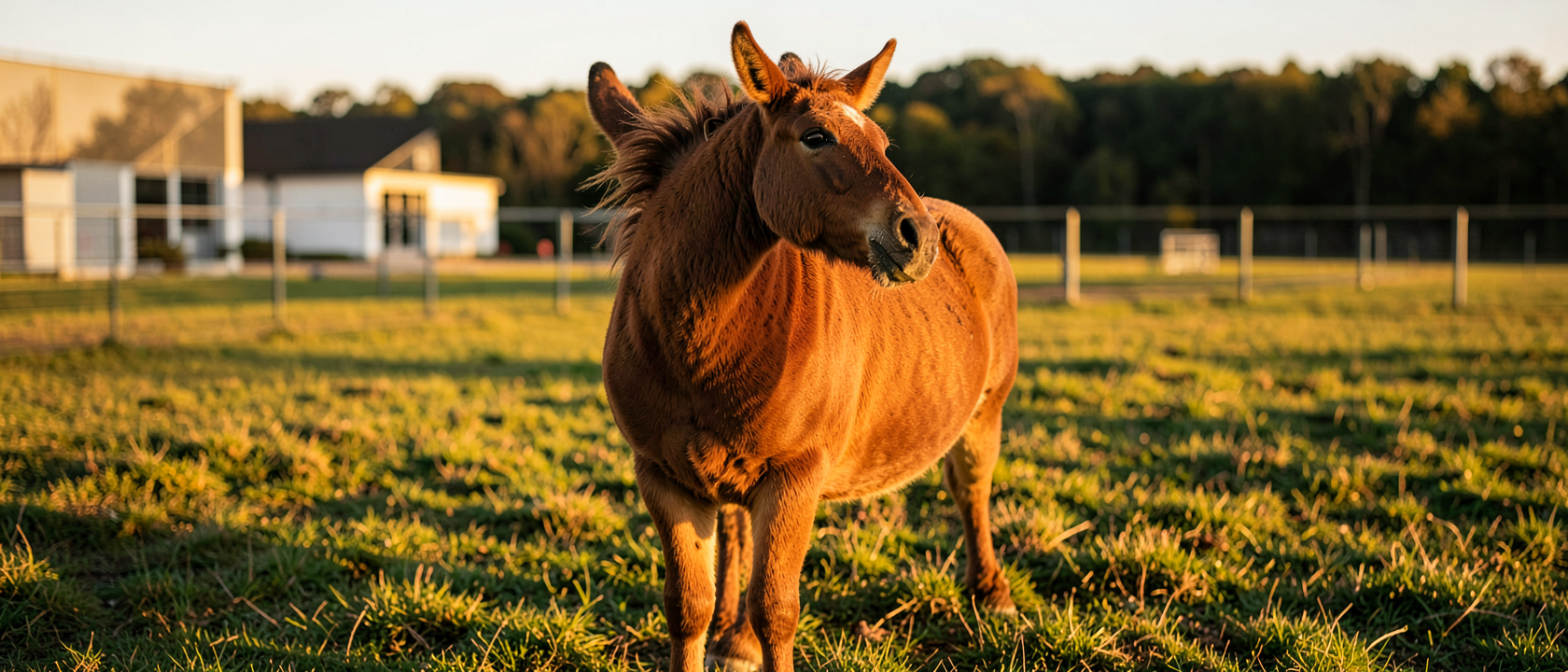
A horse can smell fear before you say a word
Domestic horses that spent a few minutes with nothing but sweat odor from frightened people became jumpier and more reluctant to be touched, even though they never saw a scared face or heard a shaking voice. A study published in PLOS One on January 14, 2026, by a team from the Institut Français du Cheval et de l’Équitation (IFCE) and INRAE in France, tested 43 female Welsh horses at a research facility in Nouzilly. Horses exposed to sweat odor collected from frightened human volunteers touched the experimenter less, stared longer at an unfamiliar object, and startled harder when an umbrella was suddenly popped open beside them, compared to horses given odor from happy volunteers or a clean, unscented pad. Their heart rates climbed too. Nothing visible or audible gave any of that away. The horses only had the smell to work with.
How a smell becomes a feeling
The design is what makes the claim hold up rather than float. Lead researcher Plotine Jardat and colleagues built the raw material first: 30 human volunteers wore cotton pads under both armpits while watching a 20-minute stretch of the horror film Sinister, meant to trigger fear, or a set of clips built to trigger joy, including the dance number from Singin’ in the Rain and “We Go Together” from Grease. Each pad was handled only by the person wearing it, then frozen at -94°F (-70°C) to keep the sweat’s chemistry from breaking down before testing. Later, a different set of animals, the 43 Welsh mares, wore a small Lycra muzzle with a net holding one pad against the nostrils, assigned at random to a fear group, a joy group, or an unscented control group. Only then did the tests run: a novelty test with an unfamiliar object, a suddenness test with the umbrella, and interaction tests where a person approached the horse or groomed it. Nobody in the room was frightened, joyful, or performing anything. Heart rate rose sharply in the fear group during the umbrella test; cortisol, measured too, varied so much between individual horses that it didn’t separate the groups the same clean way. The project was funded by ANR Emodour and the IFCE, purpose-built to isolate smell as a channel for emotion, not a side finding from something else.
Why a horse would bother reading your sweat at all
Horses survive by noticing danger early, and for a herd animal that mostly means noticing it in something else first. Waiting until a companion visibly bolts is reacting a beat too late. Picking up a chemical signal of fear before any visible sign of it shows up is the kind of shortcut natural selection tends to keep around inside a herd, and this study suggests it works across species lines too. That evolutionary framing is the researchers’ read on the result, not something the umbrella test measures directly; the measured part is the fear response and the drop in willingness to interact. What that means for anyone standing near a horse, in a stable aisle, on a trail, or backing one into a trailer, is that the horse may already be reading something the handler doesn’t know they’re putting out. Jardat, in comments about the finding, made a point of the practical side: horses seem to cooperate differently depending on the mood a person brings into the arena, and picking a calmer day to ask for something difficult can change the outcome. That’s a personal reflection from the researcher, not a separate result the study measured.
It’s not your shaky hands giving you away
The common assumption is that a horse reads fear off a person’s body: a tight grip on the reins, a stiff posture, a voice that wavers. Control those, the thinking goes, and you could stay calm-looking around a horse no matter what you actually feel. This study removes every one of those cues on purpose. No visible fear, no scared voice, nothing to see or hear at all, only a scent, and the fear response showed up anyway: less touching, more staring at the unfamiliar object, a sharper startle to the umbrella, a higher heart rate. Jardat has described the older idea that horses can smell fear as one that stayed just a theory for years, mostly because smell is hard to study under controlled conditions. This is the first controlled evidence behind it, and it means that managing your outward signals is not managing the whole channel. The nose was getting information the eyes and ears never had to send.
What the sweat of a happy human smells like to a horse: nobody’s tested that
What the study doesn’t settle is the flip side. Horses given joy odor and horses given a clean, unscented pad were grouped together against the fear group in the main result, but the source doesn’t spell out whether joy odor on its own pushed horses toward being more relaxed or more willing to approach than the plain control, only that it didn’t produce the fear response. Whether a horse would visibly relax, seek out more contact, or approach faster around the smell of a calm or happy person, compared to no scent signal at all, is a real open question. So is whether the effect looks the same across breeds, ages, or horses with very different amounts of time around people: a lesson pony handled daily by children and a young horse with almost no human contact are not guaranteed to process the same smell the same way. All 43 horses in this study were female Welsh horses at one research facility. Nobody has yet tested whether a Shetland pony, a gelding, or an older trail horse reads human sweat the same way.