Five Orcas, One Liver, No Survivors
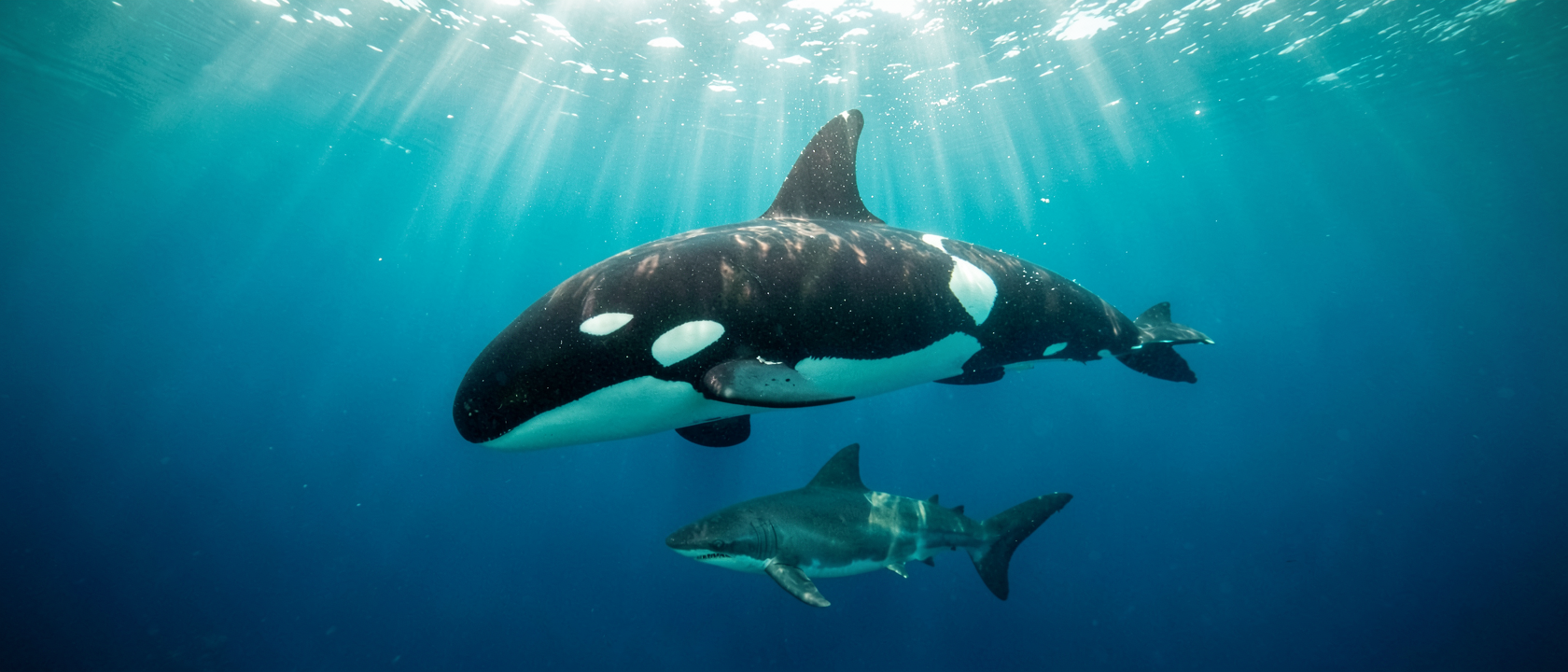
Off the southern Gulf of California, near La Paz in Baja California Sur, killer whales (Orcinus orca) hunt juvenile great white sharks (Carcharodon carcharias), flip them onto their backs, and eat exactly one organ before swimming away from the rest of the body. Marine biologist Erick Higuera Rivas, of Conexiones Terramar and Pelagic Life, led the team that documented the behavior, working with marine ecologist Salvador Jorgensen of California State University and marine biologist Francesca Pancaldi of Mexico’s Interdisciplinary Center for Marine Sciences. The paper ran in Frontiers in Marine Science on November 2, 2025.
Three predation events made it into the record, and the researchers captured two of them in detail on underwater cameras and a drone. Five female orcas from the group killed one juvenile white shark in August 2020, then attacked and killed a second only minutes later. Two years on, in August 2022, a mixed group from the same pod, one adult male, one adult female, two subadults and a calf, brought down another juvenile. Every time, the pattern held: one shark targeted, the liver removed, the rest of the carcass left in the water. The team nicknamed the group Moctezuma’s pod, after its best-known member, a fifty-year-old male. It is the first confirmed case of orcas hunting juvenile white sharks in Mexican waters, and only the second such case recorded anywhere; the first was a single subadult white shark, not yet full grown, taken off Mossel Bay, South Africa.
How You Paralyze a Shark With Nothing But an Upside-Down Flip
Great white sharks, like several other shark species, go completely limp when turned upside down. The disorientation triggers tonic immobility, an involuntary reflex that shuts down the shark’s muscles and leaves it unable to swim or bite. Higuera Rivas and his colleagues describe the orcas exploiting exactly this: working together, the group corners a juvenile shark and rolls it belly-up, and the shark stops fighting almost immediately.
With the shark paralyzed, the orcas open the body and pull out the liver, and likely other organs as well, while the shark is still alive and defenseless. The wounds the researchers documented suggest the orcas have refined a technique for doing this while avoiding the shark’s teeth, something that matters more with a struggling adult than a limp juvenile. Once the liver is free, it gets shared. Higuera Rivas recalled watching the footage: the liver hanging loose from one side of a shark, then, a few minutes later, an orca surfacing with it in its mouth. The organ is passed around the group, calves included, and the rest of the shark, muscle, skin, fins, is abandoned uneaten.
Why the Liver, and Why the Young Ones
A great white shark’s liver can weigh up to 1,300 pounds (about 600 kg), roughly a quarter of the animal’s total body mass. It is packed with fat, functioning as an energy reserve the shark draws on during long migrations. For an orca, that single organ is the most calorie-dense target on the entire animal, worth more, pound for pound, than the muscle the orcas leave behind. Researchers propose this is the whole point of the strategy: why process a full shark carcass when one organ carries most of the calories.
The choice of juveniles fits the same logic, in the researchers’ reading of the footage. A juvenile white shark, something like 6.6 feet (2 m) long by outside estimates, has not yet learned to treat a killer whale as a threat and flee. Adult sharks are known to abandon entire feeding grounds the moment orcas show up nearby. A juvenile that does not run is a juvenile that can be flipped with less risk to the orcas doing the flipping, which the team frames as a plausible explanation, not a proven one.
The Ocean’s Top Predator Has a Predator
The great white shark’s reputation, built by decades of documentaries and a numbing amount of shark-attack coverage, casts it as the ocean’s unbeatable predator, stopped by nothing short of a boat propeller. The record contradicts that directly: white sharks have exactly one known natural predator in the wild, the orca, and they respond to its presence by clearing out of entire hunting grounds. A coordinated group of orcas can immobilize and kill a juvenile white shark with what looks, on the footage, like efficiency rather than struggle.
The second assumption this kills is about tonic immobility itself. It usually gets described as a defense, a “playing dead” reflex like an opossum’s, something an animal does to survive an attack. Here it is the attack. The orcas do not wait for a shark to go limp; they force it. Why sharks evolved a reflex that hands a predator an easy kill is not something scientists have settled. It may be a leftover defense mechanism, it may be tied to mating behavior, but nobody currently knows for certain, and this pod has found a way to turn whatever it is into the exact opposite of protection.
Three Kills Don’t Make a Habit
Three documented predation events is not enough to call this a settled habit. The same pod was reported in November 2024 attacking and feeding on whale sharks, which raises a question researchers can’t yet answer: whether Moctezuma’s pod is shifting toward sharks and rays as a preferred prey group, or whether these are opportunistic kills from generalist hunters that happened to be caught on camera more than once.
With so few events on record, any link to shark pupping season, when more juveniles might be swimming through the area, stays a suggestion rather than a finding. Researchers also don’t know whether a juvenile white shark’s habit of not fleeing orcas is something it is born without or something it simply hasn’t learned yet. Francesca Pancaldi’s team has noted more great white sharks moving through the Gulf of California over the past decade, possibly tied to shifting nursery zones during El Niño years, but whether that overlap explains what these orcas are doing, or just makes it easier to film, is still open.